

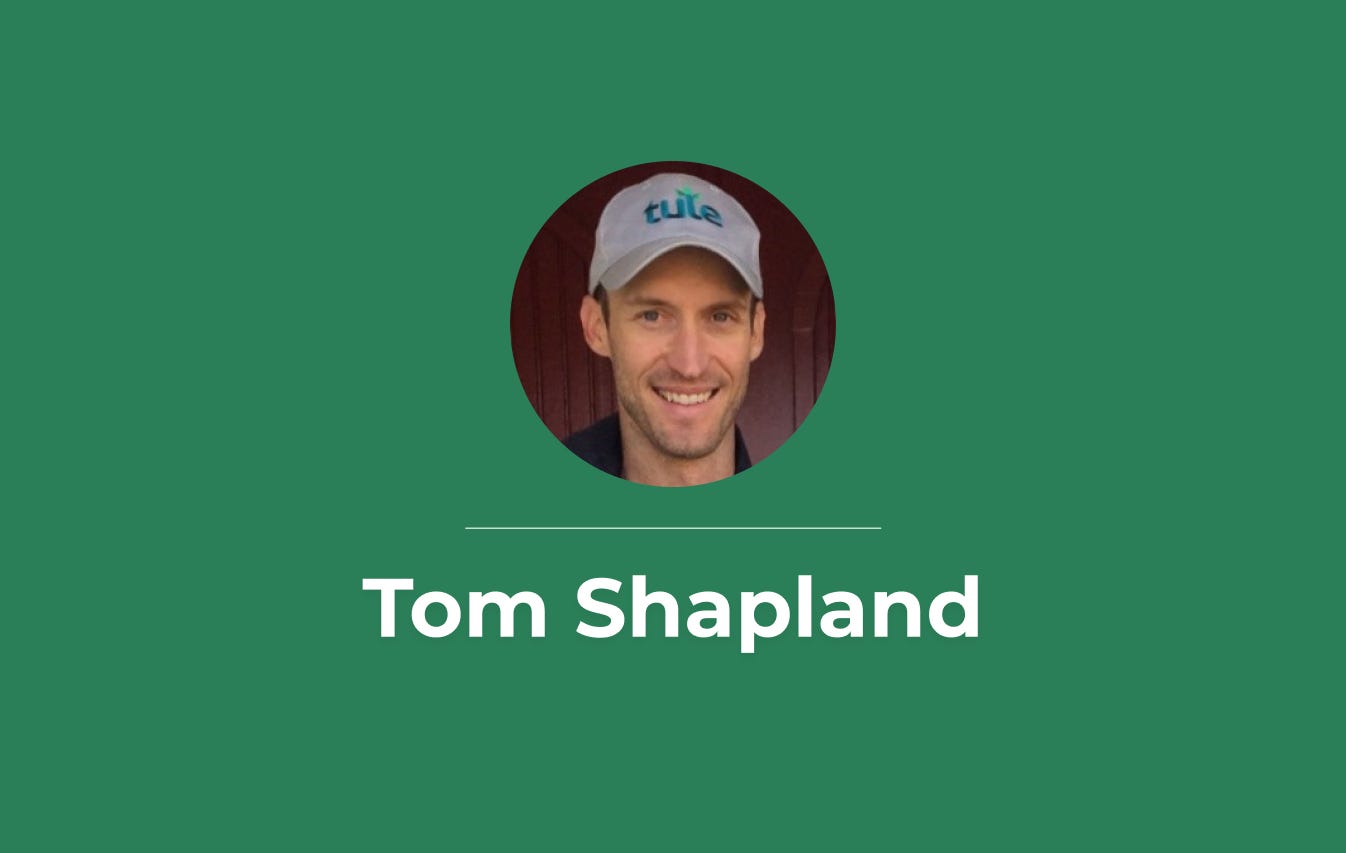
Tom Shapland is the Product Manager at LiveKit. Rising to prominence in the 2010s by turning PhD research at the University of California, Davis into a commercial irrigation analytics company, he is now helping build an open source platform for multimodal, real-time voice and video agents used in production by developers across sectors. At LiveKit, whose open source stack launched in 2020 and underpins a cloud platform serving voice, video, and physical AI agents at global scale, he focuses on productizing ultra-low-latency infrastructure into practical tools for AI builders.
Previously, as CEO at Canonical AI, he built “Mixpanel for Voice AI,” an analytics platform that mapped caller journeys across thousands of Voice AI calls to show where and why agents failed, enabling developers to systematically improve conversion and reliability. Between 2023 and 2025, Canonical AI processed large volumes of agent call transcripts and latency metrics, giving Voice AI teams a single interface to debug failure paths and unlock additional call volume from enterprise customers.
His career highlights include founding and serving for 9 years as Co‑founder and CEO of Tule, a Y Combinator S14 company that commercialized UC Davis research into in‑field sensors that directly measure Actual Evapotranspiration (ETa) to guide irrigation decisions. From 2014 to 2023, Tule deployed research-based hardware and software across California specialty crops, with its sensors installed in commercial vineyards and orchards to quantify field‑scale water use and crop water stress, helping growers cut irrigation water use by material percentages while maintaining yields. In January 2023, CropX Technologies acquired Tule, adding its above‑canopy sensing technology to a global precision irrigation platform operating in more than 50 countries.
Rising to prominence in the 2010s as an influential figure at the intersection of agricultural science and data infrastructure, he has since translated that domain expertise into Voice AI analytics and now into real‑time multimodal agent platforms. He remains closely connected to the Y Combinator alumni ecosystem, leveraging over a decade of founder experience—from PhD research commercialization to post‑acquisition leadership—to mentor teams building the next generation of agentic AI products.
Listen on Apple Podcasts↗ and Spotify↗
The Most Dangerous Advantage a Founder Has
Most people think that to start a company, you need experience. You want to know the pitfalls, the market dynamics, and exactly how the “game” is played. We vaunt experience as the ultimate shield against failure.
But Tom Shapland, a decade-long founder turned Product Manager, fundamentally disagrees. He argues that the most important asset he had when starting his first company wasn’t his PhD or his technical expertise. It was his naivete.
“The secret sauce I had is what every first-time founder has, and that is naivete,” Tom shared during our conversation. “You just don’t know how hard it’s gonna be. And you just think, oh, I can take on the world.”
Here’s the thing: experience is often just a collection of reasons why something won’t work. When you’ve seen a dozen startups fail in a specific niche, you stop looking at that niche. When you know how hard it is to build a sales motion in a legacy industry like agriculture, you don’t even try. But the first-time founder doesn’t know better. They haven’t been burned by the reality of the 10-year grind, so they walk into the fire with a smile.
Now, as a Product Manager at LiveKit—building the engine for the voice AI revolution—Tom brings a unique perspective. He *knows* how hard it is. He knows the luck involved. The challenge for the experienced operator is deliberately choosing to ignore those scars and find that same spirit of “delusional” confidence that made the first win possible.
We often talk about “Product-Market Fit” as a destination. But looking at Tom’s journey with Tule, it’s clear that traction isn’t just a metric; it’s an unblocker. Before he had a product, he couldn’t find a co-founder. He couldn’t find investors. He couldn’t find employees. It was only when he stopped building and started pre-selling—getting farmers to sign up for a product that didn’t exist—that everything else fell into place.
Traction unblocks the world. It’s the ultimate signal that your “side quest” is actually the main mission.
As we move into a world where we can simply talk to our computers—where English is the new terminal—the role of the builder changes. Whether you’re a founder or a PM, the job is the same: have the clarity of thought and the naive courage to ask for what shouldn’t be possible yet.


