

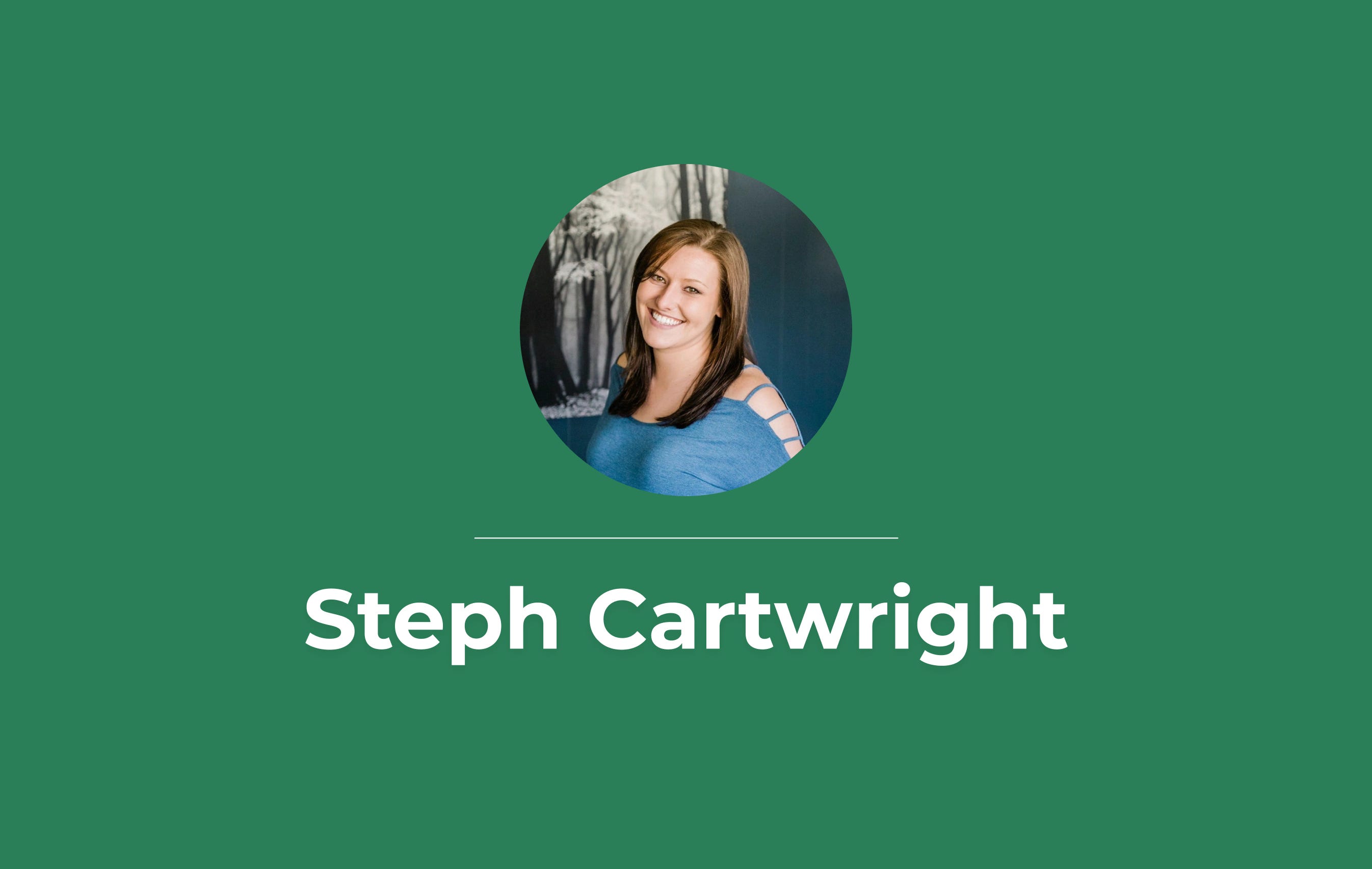
Steph Cartwright is a Job Search Strategist and Certified Professional Resume Writer (CPRW) at Off The Clock Resumes LLC, where she helps tech and industry leaders present as confident, high‑value candidates on screen. She became known for career branding that turns complex experience into clear, employer‑ready narratives that consistently convert views into interviews. She has built an audience of more than 3,200 followers and over 500 direct connections while operating from the Spokane–Coeur d’Alene region.
Previously, as Founder and Principal Writer at Off The Clock Resumes LLC, she scaled a boutique career services practice into a specialized partner for job seekers navigating competitive roles with compensation packages frequently exceeding six figures. She became known for a structured, data‑driven intake process that translates into résumés and LinkedIn profiles optimized for modern applicant tracking systems, significantly increasing interview rates and offer quality for her clients. Through one‑to‑one engagements and digital products, she has supported hundreds of professionals across tech and adjacent industries.
Her career highlights include earning and maintaining the CPRW credential, signaling adherence to rigorous professional standards in résumé writing and career communication. She has continued to refine a distinctive positioning around “career branding that gets noticed and lands interviews with higher offers,” focusing on clarity of story, on‑screen confidence, and repeatable systems that scale beyond any single job search. By combining structured frameworks with empathy for career pivots, she has become a trusted partner for leaders who need to articulate complex trajectories in two pages or less.
Listen to episode 161 on Spotify or Apple Podcasts
Why the old keyword-stuffing playbook is dead. And what job seekers should do instead.
“I am the face behind my business and in front of my business,” Steph says, “as well as the one that does all the one-on-one work with clients.” There’s something in how she phrases it—face behind and in front—that captures the exhausting clarity of solopreneurship. She’s the product and the salesperson. The expert and the marketer. And she’s been doing it since 2014.
She started as a serial job seeker. “I am well rehearsed in job search practices,” she says, with the kind of dry humor that only comes from having lived through too many of them. Now she’s getting ready to attend another annual conference to stay current on hiring tech. The landscape, she tells me, is shifting faster than most people realize.
I ask her what current hiring practices are doing to block talented candidates.
“It’s gone beyond applicant tracking systems,” she says. “That used to be very keyword based. And now it’s not so much the worry of making sure your resume has all the right keywords.” She pauses. “AI is now adding generative and predictive analytics to this technology. It’s actually going to make it easier for job seekers because they don’t have to worry so much about the specific keywords.”
This is counterintuitive. For years, the advice was: mirror the job posting. Product development. Project management. Agile methodology. Match the strings, beat the algorithm, get in front of a human. That era, Steph tells me, is ending.
She walks me through an example. Say a product developer five to ten years ago wanted to tailor their resume. They’d add the term product development to ensure their resume would surface in searches. If someone went into LinkedIn looking for that skill, they’d pop up. “It was really important to have the right keywords, the right phrasing,” she says.
Now? “If you don’t have the specific words—the specific product development phrase—AI is going to look at your experience and it’s going to look at context. It’s going to look at, you know, predictive. If you say you’ve done this, you likely have this skill.” She lets that land. “AI is going to start making assumptions about you that will help you.”
The old systems were deterministic. You could game them if you knew the rules. The new systems are probabilistic. They infer. They read between the lines. This is good news for generalists and career changers—people whose careers don’t fit neatly into keyword buckets.
I tell her this resonates. I’ve jumped between design and product management throughout my career, and I’ve gotten direct questions: What do you actually want to do? Few people accept my honest answer, which is basically whatever the company needs and I find interesting at the time.
Steph nods. “At some point in the last ten years, the trend shifted from wanting someone with a broad range of skills to: we want a specialist, we want someone who really is an expert in this one thing.” She pauses. “But now that we’re adding in this AI element, we’re kind of going back to the original trend where AI wants to see the breadth of your knowledge and then be able to say, yes, this person has these skills, but they also have these skills, which will likely be a good fit.”
The conversation turns to how people market themselves, and Steph lands on an analogy that sticks.
“Highlighting benefits over features,” she says. “Those keywords, those skills—those were features, not the benefits. Whereas now, if you shift your mindset to: I’m going to position myself as the best fit for this job, not because of my skills, not because of the features that I bring, but because of the impact I’ve made.”
She explains how this plays out technically. “One bullet on your resume can speak to an ATS based on the keywords in it—so that one bullet may be associated with project management skills. Whereas now with AI, that one bullet, depending on how much information you give it, might register five, six, seven different skills associated with that one bullet because of the impact you had.”
The example she gives: designing a product that increased efficiency for a large enterprise. That single bullet, written with context, signals project planning, project management, design, strategy—multiple capabilities inferred from one outcome. The question isn’t What can you do? It’s What have you made happen?
I bring up LinkedIn, and how I’ve started writing narrative case studies instead of bullet points for each role. The bet is that AI will read it and extract more context to provide better evaluations to hiring managers.
Steph lights up. “Storytelling, especially on LinkedIn, is key. I used to work with clients very specifically on, let’s take these bullets on your resume and expand them as projects on your LinkedIn profile. Because that project section is also searchable. It’s also readable by the tools behind the scenes.”
She leans into it. “Tell me the full story. How it started. What was the challenge that needed to be resolved. What you did, who you impacted, what obstacles you faced, and then what was the ultimate outcome.” Each project gets 2000+ characters, she says—2000 characters the AI can read, infer from, match you to opportunities.
But the real shift in her thinking, she tells me, isn’t about resumes at all.
“If you don’t tailor your resume for this specific job before you apply, you won’t even be considered,” she says. “I am still a strong believer in tailoring a resume if you’re gonna apply online. But now, because the competition is so high, I would say it’s more important to have a full blown strategy built outside of applying for jobs online.”
What does that strategy look like?
“It’s more important to be strategic in who do I need to talk to? Who can I start relationships with—even if it doesn’t result in a job at that company—but is going to expand my reach in my targeted field or industry?”
She reframes networking as something that makes people less uncomfortable. “You can’t just think of it as networking—just getting your name out there and hoping something lands. But building professional friendships is what is going to make the difference.”
I ask her how she coaches someone who’s just starting out, someone without an existing network.
“Find a trade or professional organization that you can join and actively participate in,” she says. “One that opens you up to develop professional friendships with people you would maybe look at as competitors for different jobs, but they’re also mentors.”
She tells me about a colleague halfway across the country. “She and I just sat down and had lunch together over Zoom and just talked shop. She has sent me referrals. I have sent her referrals. I would call her a mentor, but we’re also friends.” There’s warmth in it. “I know she’s in my corner. She will never do something to jeopardize that professional friendship.”
I share a story from my own career. Five years ago, I had an offer from a company that I turned down for something more interesting. The hiring manager was a class act about it—That sounds really cool, I’m really excited for you—and he kept in touch. For five years. Then, recently, when I was looking again, an opening came up. I interviewed. It went well. Then a budget issue threatened to kill it. Another team needed to shuffle a designer internally. I waited all weekend, assuming it was over.
The recruiter called. We want you here. We have to work this out, but we really want to figure out a way to make this work. They talked to the VPs. Got budget approval. Carved a spot out for me.
“That’s best case scenario right there,” Steph says.
It’s a five-year story arc, I tell her. And it only worked because the relationship was real.
“That is the end goal,” she says. “You’re not going to find that by just applying for jobs on Indeed. You have to do that extra work. And the narrative of this is how you’re supposed to find a new job keeps people from trying.”
She pauses. “Companies are notorious for creating roles for the people they want. If you can figure out what that company’s challenges are and how you can help them solve those challenges—that’s what’s going to help you get your foot in the door at a company you’re gonna be happy with.”
Near the end, she gets reflective. “I didn’t go into this thinking we were gonna deep dive on resumes or LinkedIn. I feel like we really covered a wide range of strategy.”
She’s right. We barely talked about formatting or bullet points. We talked about the slow, patient work of being known. Of building something that compounds. Of treating your career like a series of stories worth telling.
The basics still matter, she reminds me. A solid LinkedIn presence. A resume ready to go. But the game has changed. The people winning aren’t the ones optimizing keywords. They’re the ones showing up—at conferences, in communities, in DMs—building professional friendships before they need them.
That’s the strategy that’s AI-proof.


