

Listen to this episode on Spotify or Apple Podcasts
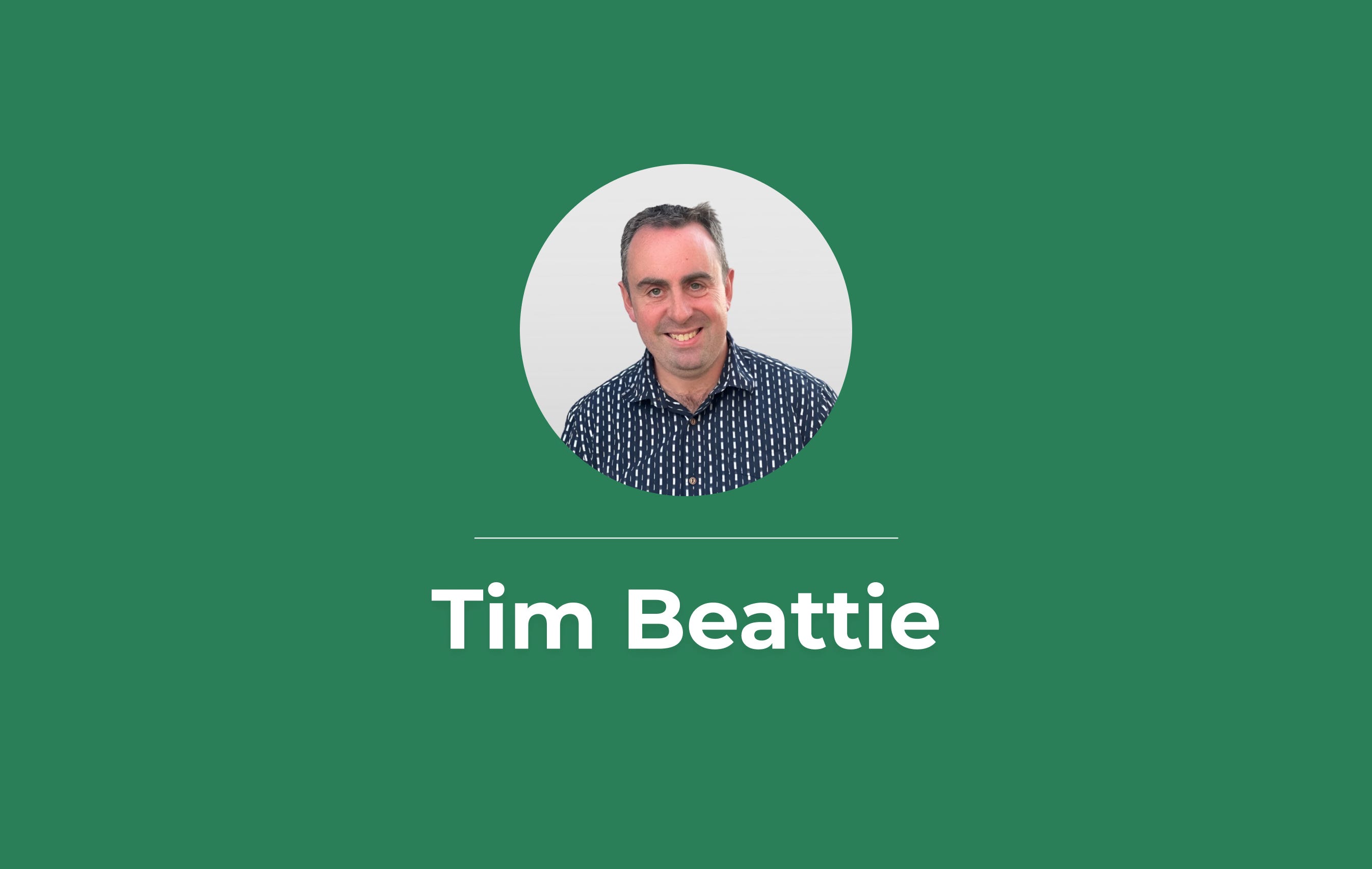
Tim Beattie spent 25 years inside major consulting firms and came to one uncomfortable conclusion: in the consultant’s financial interest to slow down, invent complexity, and make problems look harder than they are. He founded Stellafai to replace that incentive structure with one where the consultant only wins if the client wins.
Tim Beattie tells me about a Christmas party. Not the kind with a story attached to it — the kind where the absence of a story is the story.
He was a young graduate consultant at a big four firm, two years into the same program for the same client. The team gathered at a pub in Winchester, England — the same pub they’d gathered at the year before. He sat there with his colleagues and tried to account for the twelve months between the two parties. “What have we done?” he says. “All we’ve done was documents. We created documentation after documentation, designs, PowerPoints, high level designs, detailed designs, requests after change, requests to change the designs.” The emphasis lands hard. “Nothing had gone live. We’d barely even written any code at that point.”
Then the number. “This customer was paying like around a million dollars a day or something on consultants.”
A million dollars a day. And the output was a stack of PowerPoints and a second Christmas party in the same pub.
Tim is originally from Belfast, Northern Ireland, now based in Winchester, UK. He spent 25 years working for four consulting companies — firms like IBM, smaller boutique outfits, eventually Red Hat — before founding Stellafai, a platform built around the idea that consulting should be measured by whether the client actually got somewhere, not by how many hours the consultant billed. He wrote a book on DevOps culture and practice. He posts on LinkedIn the way some people journal — daily, compulsively, working ideas out in public. He describes the habit as “my daily therapy to get things outta my head.”
But the Christmas party stuck. Twenty-two years later, he still returns to it when I ask him where the mission started. “I was still quite a young grad, naive,” he says, “and I thought, well, you know, I guess the leaders and the partners, they know what they’re doing. But I remember thinking then — there’s gotta be a better way.”
What stayed with me wasn’t the anecdote. It was the language that came after it, when he started describing how the industry actually sees the people inside it.
“I had a resource manager,” Tim says. “And their job was to resource me like I was, you know, a tool or a commodity or something.” He lingers on the word. “Not a human being. I was being resourced onto a project and I was a resource in there.”
I’ve worked adjacent to consulting my whole career. I’ve seen the invoices, the statement-of-work theater, the way a project gets scoped at three times the complexity it needs to be. But hearing Tim describe himself as a resource — not a person, a resource — clarified something I hadn’t been able to name. The waste isn’t accidental. It’s structural. The language tells you everything. When you call people resources, you’ve already decided that the system’s job is allocation, not outcomes.
Tim gets to the structural argument and he doesn’t soften it. “It’s actually in the interests of the consulting company to go slower,” he says. “It’s actually in their interests to invent work, to create more work, to create more complexity, to make things look really, really hard.” The repetition is deliberate. He’s not theorizing. He’s describing something he watched happen for two decades.
The time-and-materials model pays consultants by the clock. The longer the engagement, the bigger the invoice. Which means every incentive in the system points toward complication, not resolution. “Then they’re gonna have to, whoa, it’s really, really hard, and now I’m gonna have to spend even more time doing this, but look, get paid more.”
I ask about the alternative — fixed price engagements, where the client locks the consultant into a number. Tim is equally skeptical. “You don’t know what you don’t know at that point,” he says. The consulting firm builds in a massive risk premium. The client writes down everything they think they need, and then reality intervenes. Every change request becomes a billing event. “The consulting company said, well, we’ll just charge for every little change they ask for, ‘cause we know they’re gonna need it.”
Both models are broken. One incentivizes going slower. The other incentivizes building walls around scope. Neither one is oriented toward the thing the client actually needed: an outcome.
The conversation shifts when Tim tells me about the voice in the back of his head. By this point in his career, he’d left the big firms for smaller, more agile shops. He was a committed agile practitioner — long-lived product teams, continuous improvement, feedback loops. He believed in it. Then the voice spoke up.
“You’re a dishonest agileist, Tim,” he says, quoting his own internal monologue. Something in his delivery changes — the rhythm slows, the words land harder. “You believe in these high performing, long lived teams, product teams. But what you do is you assemble projects and these teams come in and then they leave.”
That’s the moment he names it. Dishonest agile. The principles were real, but the practice contradicted them. He was building project teams that dissolved on delivery — the exact opposite of what the methodology called for. “I just thought, yeah, this is dishonest agile.”
It drove him to Red Hat, where the model was different. Enablement over delivery. The job wasn’t to do the work for the client. It was to leave behind a team that could do it themselves. “Leaving behind a high performing team inside the customer,” as he describes it. For the first time, he felt like the work matched the philosophy.
I bring up Christopher Nolan — the director who, when he landed any film, immediately walked to the production studio in the house behind his own so he could start pre-production months before the studio system had a chance to impose its waste. I tell Tim that Nolan’s insight was simple: if you micromanage yourself and proactively report to people, they leave you alone and give you control.
Tim latches onto it. “If I’m open and clear about this is what I’m doing, this is why I’m doing it — generally good things will happen because you get feedback of that transparency.”
The Nolan parallel lands differently than I expected. It’s not about filmmaking. It’s about what happens when you take accountability so thoroughly that the bureaucracy has nothing to manage. That’s the opposite of the consulting model, where opacity is the product.
When Tim describes how he works now, it sounds less like consulting and more like documentary production. “When I go into a room for a three day workshop, I bring my SMO cameras, I mic us all up,” he says. “Someone’s gonna say something or just gonna be this moment, which you’re gonna wanna replay or we’re gonna want to think back to. I just wanna have that digitally stored.”
He captures every workshop on video. Every call gets transcribed. His consultants journal daily — what they’re thinking, what they’re learning, what’s blocking them. All of it feeds into what he calls the brain: a repository of coaching assets, client conversations, outcomes data, and reflective notes that accumulates over the life of an engagement.
“The IP that the consultants brought has sort of got out of people’s heads and into data sets that can then feed the LLM,” he says. That’s the endgame. When the engagement ends and the consultants leave, the client doesn’t just keep a deck. They keep the brain — a system trained on everything the team learned together, able to surface patterns and insights long after the humans who generated them have moved on.
It’s an elegant inversion. Traditional consulting extracts knowledge from the client’s organization and concentrates it in the consultant’s head, where it leaves when the contract ends. Tim is trying to run the transfer in the opposite direction.
But here’s what I didn’t expect. Tim captures everything. He transcribes every call, records every workshop, feeds months of data into AI systems. He is, by any measure, one of the more AI-forward practitioners I’ve encountered in professional services. And yet he draws one hard line.
“I don’t think an AI bot, even if it’s got the most realistic human voice in the world, I don’t see an AI agent being able to do that,” he says. He’s talking about the first meeting — the initial facilitation, the moment when a group of people who don’t yet trust each other have to say what’s actually true. “There’s something about energy and feeling and facilitation and setting up the room and setting up the context to create that safety.”
He describes the facilitators he brings in as people who “make people feel safe in a room” — who can “help get stuff out of people’s heads and onto a wall on sticky notes on whiteboards with tape.” The technology comes after. The recording comes after. The AI comes after. But the act of making a room safe enough for honesty — that’s still a human job.
I think about this after we hang up. The man who mics every workshop and feeds it all into an LLM still believes the most important moment in any engagement is the one no machine can replicate. Not because the technology isn’t good enough yet, but because the thing that makes it work — the feeling of safety, the energy of a room where people decide to stop performing and start telling the truth — doesn’t transfer through a transcript.
He records everything that comes after. But the first act, the one that makes all the rest of it possible, he protects from automation entirely.
Guest Bio: Tim Beattie
Tim Beattie is the Co-founder and CEO of Stellafai, an outcomes-focused consulting platform founded in August 2022 to replace time-billed engagements with an enablement model that leaves client teams permanently more capable. Rising to prominence in the 2010s as a consulting culture leader, he became widely regarded as one of the clearest practitioners working on the gap between what professional services firms promise and what their incentive structures actually deliver. At Stellafai, which reached its first paid customer by October 2022, reached general availability in January 2023, and has reported 10x growth since launch, he leads the effort to make organizational change a measurable, auditable outcome rather than a billable activity.
Previously, as DevOps Culture Enablement lead at Red Hat across Europe and the Middle East, he helped enterprises adopt agile and DevOps as genuine operating philosophies rather than compliance exercises. He became known for identifying and naming what he called “dishonest agile” — the practice of assembling project teams that disbanded immediately after delivery, contradicting the continuity and learning loops that agile methods require. His regional scope encompassed enterprises across two continents during a period of significant enterprise digital transformation.
His career highlights include 25 years across major consulting firms, including IBM and several boutique professional services organizations, where he observed firsthand how time-and-materials billing structurally rewards complexity and delay over outcomes — a dynamic he documented in DevOps Culture and Practice with OpenShift, a practitioner guide integrating lean, agile, and design thinking with hands-on technical enablement. That book, and the framework behind Stellafai, reflect a consistent career mission: making consulting less wasteful, more accountable, and more genuinely enabling.
Hey,
Thanks for reading this. I mean that. There's a lot of content out there competing for your attention, and you spent some of it here. I hope it was worth it. Even better, I hope it prompted you to think about something differently enough that you'd share it with someone who'd get something out of it too.
I started this podcast because tactics never stuck with me. What stuck were stories — business biographies, autobiographies, the decisions people made and why they made them. The principle only clicks once you know the story behind it.
So I built the thing I wanted to read. Every week I have two conversations with people who build in technology and product. Then I write the essay I wish I could find — one that puts you inside the conversation, through my eyes. What caught me off guard. What I kept thinking about after we hung up. Where the principle actually lives once you strip away the jargon.
I make this for myself first. If you read the way I do, you’ll want it too.
PS — If you want to pitch coming on the show, or you know someone I should talk to, shoot me an email at caden@hey.com with "January752" in the subject line so it gets past my filters. I'm not optimizing for famous guests. I'm optimizing for interesting conversations, even from people who aren't LinkedIn influencers.


