

Listen to this episode on Spotify or Apple Podcasts
They removed the timer from a recording app. They added balloons, then quadrupled her rate from $400 a month to $1,800. Molly walked — and used the story to explain something I’ve been circling for years: most product roadmaps are written for the board, not the customer.
Molly is twenty minutes into a story about a phone call she had with Riverside, the video-recording software her podcast agency was using to record clients. She is not laughing. She is doing the slightly-controlled-anger voice of someone who has had to say the same obvious thing in three different meetings.
“You are killing my cost, man,” she tells me she told them. “You are killing my cost of goods sold.”
She is in Costa Rica. I am in Utah. There is a kind of dry, transactional warmth in how she lays it out, the way someone who runs an actual business talks about a vendor who doesn’t run one. Molly owns Heartcast Media — twenty-five years in multimedia, the company that produces over a thousand podcast episodes for clients who include the Department of Health, NATO, and a long list of CEOs who hire her specifically so that they don’t have to think about microphones. She knows what an agency needs from a recording tool. She knows what an agency does not need.
What an agency does not need, she tells me, is balloons.
“They added balloons. They added all this crap that no agency is ever going to use, and then they turned around and said, ‘We’re going to change your rate from four hundred a month to eighteen hundred a month because now you have emojis and balloons, and you can make magic clips.’”
The list itself is the joke — emojis, balloons, magic clips, four times the price — and she delivers it flat, the way you read a receipt out loud. She is still annoyed about it years later. You can tell because she still remembers the exact dollar figures.
“They took the timer off for two and a half months a couple years ago,” she says. “I’m like, this is literally the very backbone of a recording is the timer.”
A timer. The one piece of an interface that tells the agency producer how long the conversation has been running, so they can pace it, cut to break, know when to wrap. Riverside removed it. For two and a half months. Then they came back with the new pricing.
“Like, tell me you don’t know anything about recording,” Molly says, “without telling me you don’t know anything about recording.”
I think about this line for the rest of our conversation. It is doing two things at once. It is making fun of a meme-shaped sentence — Molly knows exactly which corner of the internet she is borrowing from — and it is making a precise accusation. The people who built the product had stopped using the product. Or had never used it. Or had used it once, in a demo, and gone back to building features they could put in a Friday email so investors would feel motion.
“I’m an agency,” Molly says she told them. “We use Adobe. I’m never going to use your shitty editor, and I’m never going to give you eighteen hundred a month.”
So she didn’t. She left for a few years. She kept paying Zoom about five hundred a month instead, which she also thought was too much, but at least Zoom was not pretending to be something it wasn’t. Riverside lost her account. They lost six thousand dollars a year off one customer.
“And it’s easy to do that in any business,” she says. “Especially with AI. You’re like, oh, I can do all these things. But if you can’t do it consistently, if you can’t create a system around it, and if it doesn’t have any real value, then you’re just cluttering the inbox and you’re training people, including your clients, to ignore you.”
Training people, including your clients, to ignore you.
The pattern she’s describing isn’t unique to Riverside. I have watched a version of this play out at every venture-backed software company I’ve ever worked near.
There is a roadmap and the roadmap has features on it, and the features have shipping dates, and the shipping dates correspond to board meetings or all-hands or fundraises. The shape of the calendar dictates the shape of the product. Someone, at some point, decided that the answer to “how do we charge more” was “ship more,” and “ship more” became its own moral category. It stopped being a means and became the work itself.
I told Molly I think of myself as the “anti-product-management product manager”. That is the only way I know how to describe what I do. I run a product builder podcast, I have done product management along with design for years, and the thing I keep arguing with my own profession about is exactly this — the gap between making plans for teams and actually delivering value to a person who is going to write a check.
“It was probably some PM,” I say, “that thought, hey, we could justify charging them more if we just add more features, rather than worrying about value, like making a more reliable tool.”
There is a thing that happens inside companies where shipping becomes performance, and the performance is mostly for investors. You need something to tell at the next board meeting. Pointing at revenue is hard because revenue is slow and full of caveats. Pointing at features is easy. The features compound visually on a slide. The features sound like motion.
The customer, in this performance, is a kind of background actor. They appear in the dashboard as a churn number. They do not appear as Molly, on a call, telling you that you have killed her cost of goods sold.
This is the thing I want to fix and don’t know how to.
Molly’s story sits inside a larger argument she has been making for the full episode, which is about positioning. She runs Heartcast Media with what she calls singular clarity — podcast production as a business development tool, podcast booking, podcast growth, period. That is the sentence. It does not change. She has owned a company before, called One Love Massive, that supported community through art, music, and culture. Nineteen employees. A hundred and sixty artists. A three-story building in DC. And every week in the staff meeting she would have everyone do the elevator pitch, and nobody could agree on what they actually sold. She tells that story like a person who has paid the tuition. She’s not running that company anymore.
Heartcast is the second version. Heartcast is the company she built after she learned what it costs to be unclear.
So when she watches Riverside lose her account because they added emojis and balloons, what she is watching is the same lesson she paid for at One Love Massive, except this time it is someone else’s lesson and the someone else is the kind of company that gets covered in tech press. She is in the position of the seasoned business owner watching the unseasoned business owner make the obvious mistake. She is not surprised. She is annoyed.
“I’d say like, you guys gotta put yourself in the seat of the user,” she tells me she told the Riverside executives, after she escalated up the corporate line and got into one of their meetings. “You jumped the shark, man, big time.”
I keep thinking about that meeting. Molly, a paying customer with a six-thousand-dollar-a-year contract on a service that is supposed to be the core infrastructure of her agency, getting into a room with the executives and telling them they jumped the shark. I want to know what the executives were thinking during that meeting. I want to know if the PM was in the room. I want to know which of the people in that meeting was the one who shipped balloons.
I don’t actually know if Riverside is doing well now. Molly mentioned that they reportedly made ten million dollars in a year, plus another ten from an investor — the math of the venture funnel adds up even when the customers are angry. Riverside might be fine. Zoom might be fine. The companies that ship the wrong things often are fine, in the short run, because the financial mechanisms that fund them are not actually tied to whether the customers like the product. They are tied to whether the next round can be raised.
But the customer is keeping a ledger. Molly is the customer. Her ledger has a line on it that says six thousand a year, gone for years, because someone added balloons.
The thing about positioning, the thing Molly keeps trying to teach me across this conversation, is that the customer’s ledger is the only ledger that matters in the long run. You can perform velocity for the board for a few quarters. You can press-release your way through a fundraise. You can put balloons on the recording app and sell that as innovation. But the customers are forming opinions about you, in their own internal accounting, and those opinions calcify into reputation, and reputation is what makes the phone ring.
Or doesn’t.
“And I think that they hurt their reputation a lot,” she says, almost as an afterthought, “because it’s like you’re working for the investors, you’re not working for the people.”
She says it the same way she said the rest of it — without drama, the way you describe the weather. The way someone who has been doing this for twenty-five years describes a pattern she has seen before and will see again.
Six thousand dollars a year. One customer. One feature decision.
That’s the receipt.
Guest Bio: Molly Ruland
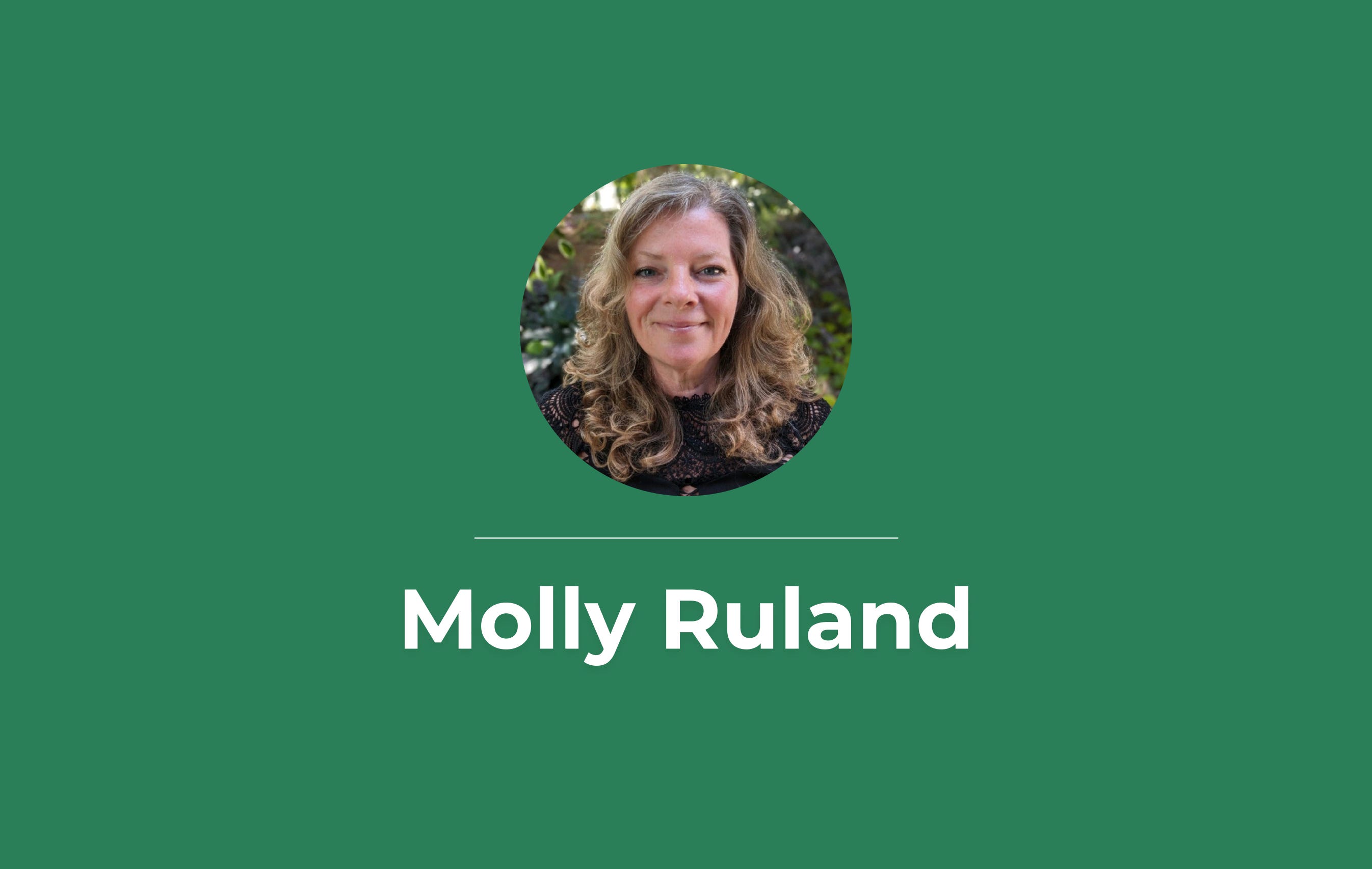
Molly Ruland is the CEO and Founder of Heartcast Media, a full-service podcast production studio she established in Washington, D.C. in 2018. Rising to prominence in the late 2010s as the demand for branded B2B podcasting accelerated, she became known for repositioning podcast production as a direct business development tool — not a media vanity project — for brands, NGOs, and founders seeking high-trust relationships with ideal clients. Under her leadership, Heartcast Media has produced more than 1,000 podcast episodes, including 7 programs that rank in the top 10% globally, with clients spanning the U.S. Department of Health, DC Government, NATO, and a range of entrepreneurs.
Previously, Ruland spent approximately 20 years running One Love Massive, a multi-sensory creative platform she built in Washington, D.C. that supported community through art, music, and culture. At its peak the operation employed 19 staff, managed 160 artists, and operated out of a three-story building — an experience that sharpened her understanding of brand clarity and the operational cost of an undefined offer. She credits One Love Massive with the hard lessons behind Heartcast Media’s singular positioning: podcast production as a business development and lead generation engine, period.
In 2026, Ruland co-authored Speak Your Way to Sales alongside nine other women entrepreneurs, a book focused on generating revenue through speaking, podcasting, and guesting. The title debuted at number one in Amazon’s small business category. She also hosts her own content marketing podcast and maintains a separate political interview series as a passion project.
Hey,
Thanks for reading this. I mean that. There’s a lot of content out there competing for your attention, and you spent some of it here. I hope it was worth it. Even better, I hope it prompted you to think about something differently enough that you’d share it with someone who’d get something out of it too.
I started this podcast because tactics never stuck with me. What stuck were stories — business biographies, autobiographies, the decisions people made and why they made them. The principle only clicks once you know the story behind it.
So I built the thing I wanted to listen to. Every week I have two conversations with people who build in technology and product. Then I write the essay in my premium newsletter (Taste Maker) to distill the principles and reflect on the narrative — one that puts you inside the conversation, through my eyes. What caught me off guard. What I kept thinking about after we hung up. Where the principle actually lives once you strip away the jargon.
I make this for myself first. If you read the way I do, you’ll want it too.
PS — If you want to pitch coming on the show, or you know someone I should talk to, shoot me an email at caden@hey.com with "January752" in the subject line so it gets past my filters. I'm not optimizing for famous guests. I'm optimizing for interesting conversations, even from people who aren't LinkedIn influencers.


