

Listen to this episode on Spotify or Apple Podcasts
Before Issac Hicks built a company that erases tedious work, he spent years watching people fight to keep it.
He tells me about the consulting days. He was at one of the Big Four, parachuting into companies in the middle of acquisitions — his job, specifically, to manage the software migrations and technology transitions that follow when one company swallows another. And the thing he kept seeing, no matter what the project was, no matter what he’d been staffed to, was a particular kind of resistance. A company gets bought. Somewhere four levels up, somebody made a lot of money. And the people on the ground, the ones who actually run the workflows, look at the new systems they’re being asked to learn and dig in their heels.
“They had such, so much pain in what they were doing,” he says, “but at least it was a pain they knew.”
That line stops me. Because it explains something I’d never been able to name. The resistance was never really about the new system being worse. It was about the old pain being familiar. He acts out the internal monologue of the bitter employee: “Oh, so I have to learn a whole new bag of crap that I have to do now? Are you serious?” The crap they already had was at least theirs. They’d built a kind of grim competence around it.
Hicks is an aerospace engineer by training who decided, somewhere along the way, that he didn’t want to pursue that career further. Consulting came next, then a turn that now looks prescient: he started building custom AI solutions before most people knew what that meant. This was the era when you had to design the neural nets yourself — perceptrons, regression analysis, basic sentiment analysis stitched together from a limited vocabulary, all of it before the transformer paper made the whole thing legible to the rest of us. He filed the paperwork for Autonomi in February of 2021. It didn’t take off until years two and three, which is to say, until the rest of the world caught up to where he already was.
So when I bring up the fear — the disruption everyone’s bracing for, the careers built entirely on being willing to do the schlep work nobody else wanted — I expect him to hedge. To do the responsible thing and acknowledge the human cost.
He doesn’t hedge. He reframes.
“I’m really an optimist about the whole AI thing,” he says, “because there’s kind of two ways you can look at it.” The first way is the one we all already know. AI comes, displaces a bunch of jobs, and what are these people going to do? Unemployment skyrockets. What about the working man. He’s not dismissive of it — he just thinks it’s overweighted. “It gets a lot of traction. I think it has a lot more traction than it deserves, and the reason I think it has more traction than it deserves is because it’s fear, uncertainty, doubt. It works well in news cycles. It’s gonna get the views, it’s gonna get the clicks.”
Then the other way. The way he actually lives in.
“If those are already profitable workers,” he says, “how much more profitable could they be if they were doing more meaningful work?” He keeps going, and the questions stack on each other like he’s been waiting to ask them. How much more could you accomplish? How much more market share could you have? How much more productivity could you get as a business owner?
The logic underneath it is almost boring in its sturdiness. A worker you employ is, by definition, someone you make money on — that’s what employment is. So the displacement instinct, the cut-the-headcount reflex, is throwing away an asset you’ve already paid to acquire. “It is more efficient to repurpose labor that is already a culture fit, that is already aligned, that you can already trust,” he says, “than it is to try to just get rid of people and then bring on systems that aren’t proven, that you have to figure out yourself or hire somebody to implement.” The person already inside your company is the cheapest, most trustworthy resource you have. The fear narrative treats them as the cost. He treats them as the gain.
I want to know what the tedious work actually is, the stuff he’s automating away. He doesn’t reach for an abstraction. He reaches for a spreadsheet.
“It just makes life so much better when you don’t have to spend hours doing that mind-numbing, soul-crushing” — he searches for the example and lands on the most ordinary one imaginable — “it’s like, ‘Oh, I’m gonna design a spreadsheet for six hours.’”
He almost laughs at it. “Who wants to do that? Nobody wants to design a spreadsheet. Are you kidding me?”
This is the part of his thinking that I find most persuasive, and it’s the part that has nothing to do with technology. Earlier in our conversation he’d described the math of it — a worker spending two-plus hours a day filling out forms, sending routine emails, checking records to make sure things are validated. Multiply that across dozens or hundreds or thousands of people and you’re talking about tens of thousands of work hours. He frames it as a cost problem, which it is. But then he says the thing that I think actually drives him: “That’s also just a morale problem. Somebody who’s spending two-plus hours a day doing that kind of thing — do you think they like that? Are they likely to stick around? What’s your employee attrition look like?”
And then he does something I didn’t expect. He gets meta with it.
“If that’s how they feel during the day,” he asks, “what are they doing outside of work? What’s their family life like? How are they interacting with strangers?” His voice slows here, the salesman tone gone entirely. “What is that doing for society at large whenever you have a bunch of people who are going through their lives just frustrated with the crap that they have to do day in and day out?”
That’s the moment the conversation stops being about automation and starts being about something older. The tedium isn’t just expensive. It’s corrosive. It follows people home. Hicks didn’t start Autonomi because he loves operational workflows — he started it, he tells me, because “I kind of saw an opportunity to both fill a market need and just kind of remove all the crap that was in people’s lives.” The market need was the business case. Removing the crap was the actual point. “I thought it would be a good thing to do to just help people stop doing stuff like that.”
I recognize the impulse — I was the guy who built the spreadsheet, every time, because someone had to. What Hicks names so cleanly is the trap inside that role: the work was always a tax, never the job.
There’s a popular essay among engineers called “Glue Work” — about the unglamorous coordination labor that holds teams together. Its hardest truth is that the risk of doing glue work is that you were never hired to do it in the first place. You do the necessary, invisible thing, and the org promotes the person who shipped the feature instead. Tedium has always operated this way. It’s necessary, nobody wants it, and the people who absorb it rarely get rewarded for absorbing it.
So here is what Hicks is really saying, underneath the optimism, and it’s the thing the displacement story gets backwards. The jobs AI takes are not the jobs people wanted. They’re the jobs people endured. As Hicks puts it, the core ethos is “just being able to get rid of those really tedious things that nobody really wants to do in the first place, but you have to — and now you can automate those.” Nobody’s calling at career built on dread. They’re calling it a career because there was no alternative, and the dread came bundled with the paycheck. Remove the dread and you haven’t removed the person. You’ve removed the tax they were paying to keep the job.
The fear assumes the tedium was the value. Hicks has watched enough acquisitions and built enough systems to know it was the opposite — the tedium was what stood between people and the value they could actually create. He’s not naive about the transition; he knows real disruption is coming, that some people whose entire identity is wrapped around the drudgery will refuse to relearn and will lose out. But the worker who’s willing to move is worth more on the other side, not less.
Which leaves the question he keeps circling back to, the one that lingered after we hung up. When the crap is gone, what fills the space?
“What else could they have been doing?” he asks. “What’s that backlog of work?” Every company he’s ever walked into has one — the pile of things everyone knew mattered and no one ever had the hours for. The strategy that never got written. The customer problem that never got solved. The thing you kept saying you’d get to.
“What would have taken you a year,” he says, “that you can now do in two or three months?”
The backlog was always there. It was just buried under six hours of building a spreadsheet nobody wanted to build.
Guest Bio: Issac Hicks
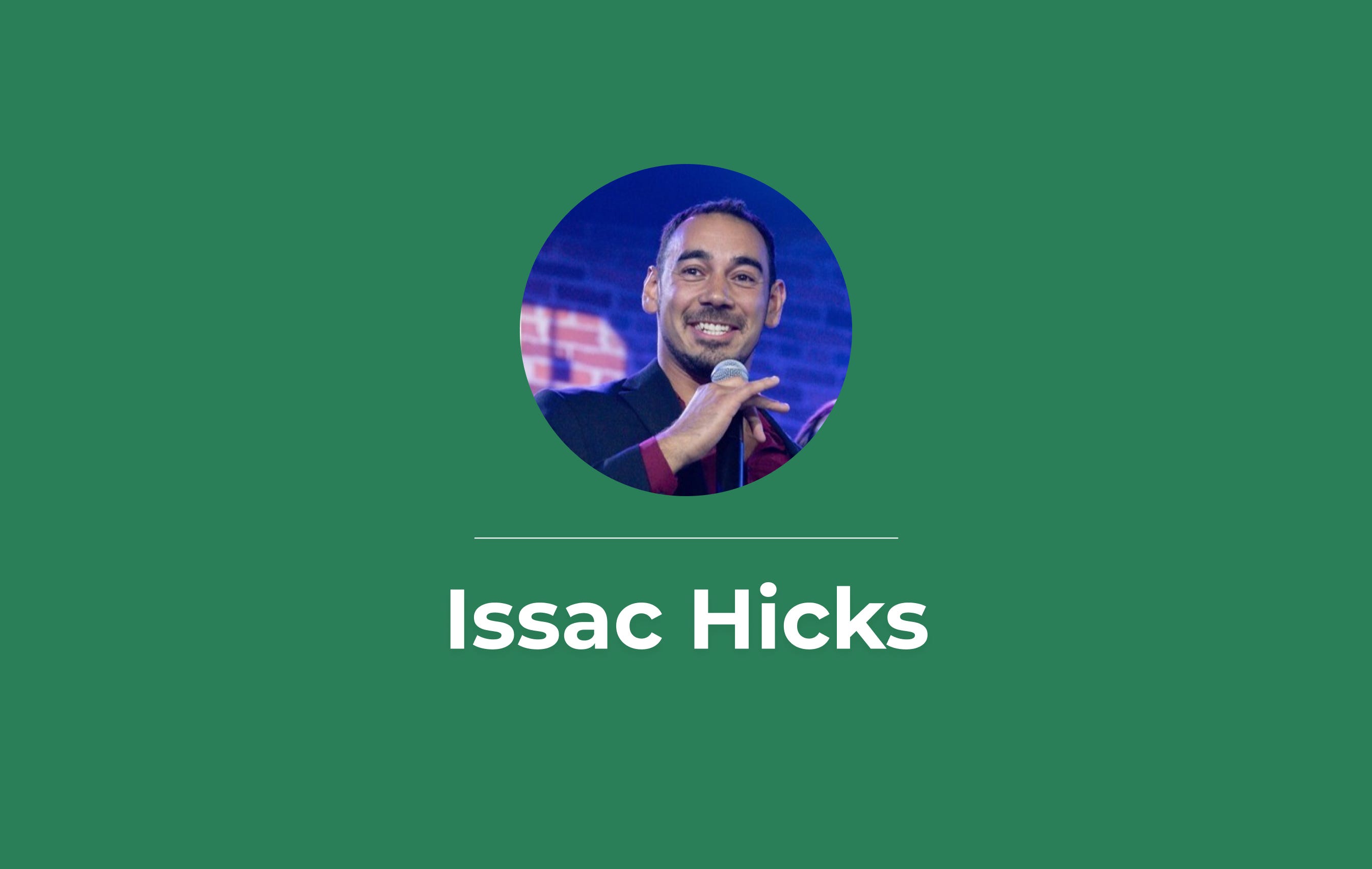
Issac Hicks is the Founder and CEO at Autonomi, an AI and automation consulting firm that helps mid-market and enterprise companies make critical work reliably repeatable. Rising to prominence in the applied AI space in the early 2020s, Hicks built Autonomi into a recognized force in business process automation — earning a seat on the Forbes Technology Council — by focusing on a thesis most consulting firms won’t touch: that the biggest source of wasted enterprise spend isn’t bad strategy, it’s the avalanche of tedious, repetitive operational work that consumes employees’ days. His firm has driven over $50 million in wasted spend back to the bottom line across deployments spanning custom applications, AI-enabled workflows, and end-to-end process automation.
Hicks arrived at entrepreneurship through an unlikely path. He earned a Bachelor’s Degree in Aerospace, Aeronautical and Astronautical Engineering from Missouri University of Science and Technology (class of 2016), then spent roughly a year working as an aerospace engineer for the government before pivoting into Big Four business consulting. In that role he specialized in technology implementation for companies undergoing software migrations and acquisitions — work that put him inside some of the most operationally chaotic moments a company can experience. He watched acquired employees dread every transition, buried under work that existed solely because no one had built a system to handle it. In February 2021, he left consulting to found Autonomi with the conviction that the gap between a business problem and a scalable AI solution was bridgeable — and that bridging it was more valuable than any single consulting engagement.
Autonomi operates across the full spectrum of automation maturity: from $5,000 pilot deployments to full-scale engagements starting at $25,000, with a primary focus on companies generating $2 million or more in annual revenue. The firm’s product portfolio includes Autonomy Books, an automated bookkeeping solution built specifically for CPA firms — a vertical where reconciliation and data entry remain stubbornly manual despite being near-perfectly suited to automation. Rather than pursue venture capital and the growth-at-any-cost model that comes with it, Hicks chose to build Autonomi as a profitable, self-sustaining business, retaining the operational control he now helps his clients achieve.
Hey,
Thanks for reading this. I mean that. There's a lot of content out there competing for your attention, and you spent some of it here. I hope it was worth it. Even better, I hope it prompted you to think about something differently enough that you'd share it with someone who'd get something out of it too.
I started this podcast because tactics never stuck with me. What stuck were stories — business biographies, autobiographies, the decisions people made and why they made them. The principle only clicks once you know the story behind it.
So I built the thing I wanted to read. Every week I have two conversations with people who build in technology and product. Then I write the essay I wish I could find — one that puts you inside the conversation, through my eyes. What caught me off guard. What I kept thinking about after we hung up. Where the principle actually lives once you strip away the jargon.
I make this for myself first. If you read the way I do, you’ll want it too.
PS — If you want to pitch coming on the show, or you know someone I should talk to, shoot me an email at caden@hey.com with "January752" in the subject line so it gets past my filters. I'm not optimizing for famous guests. I'm optimizing for interesting conversations, even from people who aren't LinkedIn influencers.


