

Listen to this episode on Spotify or Apple Podcasts
Marcelo Calbucci is describing a product manager who has done everything right, and who is about to make a mistake.
The setup is mundane on purpose. The customer wants tags. They’ve asked for tags. Ten support tickets came in this month asking for the same thing — the ability to label their files, their emails, organize them their own way. The product manager pulls the tickets together and walks into the leadership meeting with a clean story. This is important. Lots of people are asking for it. Here is the evidence.
“And you go to the leadership,” Marcelo says, half-acting the part, “and it’s like, this is so important. Lots of people are asking for it.”
He lets the picture hang there for a second, because the picture is the trap.
“The real question is like, wait a second. Why are they trying to do that? What exactly are they trying to do?”
I’ve watched a lot of product people walk into that exact meeting. I’ve been in the room for the version where the tickets win and the team ships the tags and nobody asks the second question. So I want to know what Marcelo thinks the second question reveals. He answers with the rest of the story.
“Maybe what they need is a consolidated list at the end of the month, because they have to provide a report to someone.” He pulls the thread one more turn. “And you’ll be like, wait a second. You don’t need tagging to do that.”
Marcelo Calbucci is the author of The PRFAQ Framework, the book he published in January 2025 adapting Amazon’s Working Backwards process for people who don’t have Amazon’s resources behind them. He has the résumé to make the claim land: roughly seven years at Microsoft, where he led engineering at Bing; about two years at Amazon, on a product and engineering team inside the HR organization, watching the PRFAQ machine run at full scale; six startups co-founded across Seattle and London over 18 years; more than $40 million raised across them. He wrote his first software at 12 and sold a CRM tool for MS-DOS at 16. We’re on a video call in late February, the book just out, and I’ve steered us toward the question everyone is asking him: where does AI fit in a methodology that is fundamentally about writing?
His answer is not the answer I expected from someone whose whole brand is a writing framework. It’s more useful than that. It’s a line — a border he draws straight down the middle of all the writing a person does at work, with the model on one side and the human alone on the other.
On one side: the tactical. The résumé. The pattern-based document where the shape is already known and ten thousand good examples already exist in the world. “If you’re doing things that are more tactical,” he says, “you need to write your own résumé — it doesn’t require a lot of strategy there.” Hand it to the model. It has seen more résumés than you ever will. The same goes, he says, for the tagging feature, once you’ve established that tagging is actually what’s needed. “Oh, let me research all the ten ways there are to do tagging, all the examples, all the patterns.” That is exactly the work a language model is built to do. “You’re not gonna create that much value by doing the work yourself. So you might as well leverage the LLM.”
On the other side: the strategic. And here his voice changes — not louder, just firmer, the way someone gets when they’re saying the part they actually care about.
“When you ask ChatGPT, like, create a business plan, or create a strategy for an app, or for a website, or for a podcast, whatever — you are telling AI, do the thinking for me, and just gimme the results. You are losing so much by doing that.”
I ask him to be precise about what’s being lost, because “losing so much” could mean the output is worse, and that’s not quite his claim.
It’s not about whether the idea is good, he tells me. It’s that your brain was never engaged. The plan arrives fully formed, and you skipped the part where producing it forced you to confront what you didn’t know. “The writing helps you think about what you don’t know,” he says, “and forces you to do some research to come back and finish the writing.” The model removes that friction. It does the research and the writing in one motion, and hands you a document you never had to struggle toward — which means you never found the holes, because finding the holes was the struggle.
This is the inversion at the center of how he thinks, and it took me the back half of our conversation to see how completely it reorganizes the AI question. Most people frame AI writing as a quality problem: is the output good enough? Marcelo frames it as an engagement problem. The output might be excellent. That’s not the point. The point is what happens — or doesn’t — inside the head of the person who was supposed to do the thinking.
Which is why the tagging story matters so much to him, and why he keeps the two halves of it apart. There’s the question of whether to build tagging — strategic, the kind of thing where the writing has to surface the real customer problem hiding under the stated one. And there’s the question of how to build tagging well once you’ve decided it’s right — tactical, ten patterns, hand it to the model. The PRFAQ is for the first. A PRD, the product requirements document engineers actually build from, is for the second. And the failure mode he sees everywhere is people running an LLM over the first kind of question, generating a confident plan for the wrong feature, and never noticing because the document looked so finished.
“It is very rare,” he tells me, “when you should use an LLM for most requirement docs.” He says it almost as a correction to himself, mid-thought, as if he’s surprised by how far the principle extends once he follows it honestly. The more strategic the document, the less the model should touch the core of it.
He’s careful, though, not to turn this into a prohibition. He uses AI. He’s emphatic that you can hand the model your assumptions and ask it to argue against them, ask it to surface the questions you haven’t thought of, ask it to brainstorm. “Not that you can’t use ChatGPT to ask questions and help you brainstorm certain things,” he says. “But you want to do the core of the thinking.” The model is allowed in the room. It just doesn’t get to be the one who decides what the room is for.
There’s a version of this distinction that sounds like a productivity tip — use AI for the boring stuff, do the important stuff yourself. But the longer he talks, the clearer it gets that he’s describing something closer to a discipline, and the discipline is harder than it sounds, because the model is so good and so fast that refusing it requires you to choose friction on purpose.
He gives me the harder case, the one where the line gets blurry. A premium feature — something behind a paywall, something that decides whether a user upgrades or churns. On the surface it’s just a feature, the same as tagging. But the questions underneath it are strategic ones. Are we going to lose users who feel this should be free? Where does it sit in the plan? “That is very strategical,” he says. “Because now we are talking about, hey, are we gonna lose users if they don’t pay?” His ruling: that one should have been a PRFAQ before it was ever a PRD. You do the strategic writing first — by hand, with the blank page, finding the holes — and only then do you let the model help you execute.
The work, in other words, is knowing which kind of writing you’re doing before you reach for the tool. And the temptation runs entirely one direction. Nobody is tempted to hand-write their résumé from scratch for the joy of the struggle. The temptation is always to let the model take the strategic document too, because it can, and because the result looks just as polished, and because the polish hides the fact that no one did the thinking.
I tell him this is starting to sound less like advice about AI and more like advice about character — the willingness to do the slow version when a fast version is sitting right there, indistinguishable from the outside. He doesn’t disagree. He reframes it in the language he uses for everything else.
“You’re moving from a bias to action,” he says, “to a bias to impact.”
That phrase had come up earlier in our conversation, aimed at a different target — the product manager who measures himself by how much he ships. But it lands differently here, pointed at the AI question. Bias to action is what a language model is perfectly built to serve. It will produce, instantly, on demand, a plan, a strategy, a business case, as much as you want, as fast as you can ask. It is the most powerful bias-to-action engine ever made. And that, in Marcelo’s telling, is exactly the danger. The thing that makes it irresistible is the thing that lets you skip the only part that mattered.
I keep coming back to that product manager from the start, the one with the ten tickets and the clean story. He didn’t do anything lazy. He gathered evidence, he found a pattern, he built a case. In a bias-to-action world he is a model employee. He shipped. And he shipped the wrong thing, because the writing he needed to do — the slow, strategic kind that would have forced him to ask what the customer was actually trying to accomplish — was precisely the kind a tool could have done for him in 30 seconds, leaving the real question unasked.
The tags would have worked. The feature would have shipped. The tickets would have closed. And somewhere a customer would still be exporting their tagged files by hand at the end of every month, building the report they needed all along, wondering why the thing they asked for didn’t give them the thing they wanted.
That was never the easy part. It only looked easy because a machine could do it.
Guest Bio: Marcelo Calbucci
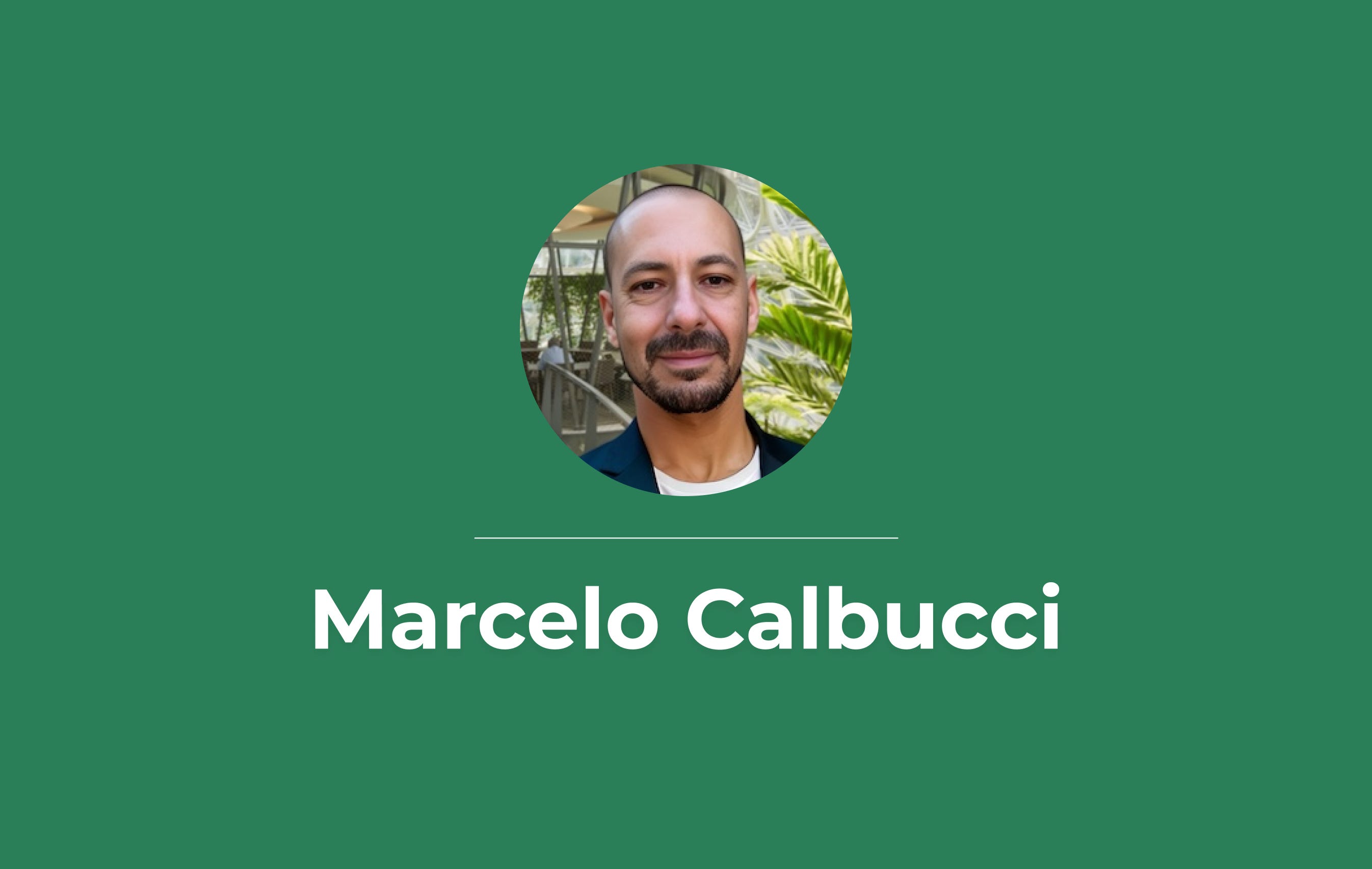
Marcelo Calbucci is the author of The PRFAQ Framework, a six-time founder, and a seasoned CPO/CTO with 25 years in technology spanning Microsoft, Amazon, and 18 years of startup building across Seattle and London. Rising to prominence in the Seattle startup ecosystem through the 2000s and 2010s, he became known for translating enterprise innovation practices into frameworks accessible to founders and product leaders at any stage — culminating in his 2025 book adapting Amazon’s Working Backwards process for organizations of all sizes.
Previously, as a product and engineering leader at Amazon, Calbucci led a team inside the company’s HR organization, an experience that gave him a firsthand view of the PRFAQ process operating at full scale — with months-long document cycles, financial modeling, and cross-functional research teams backing major bets. Before Amazon, he spent approximately seven years at Microsoft, where he led engineering at Bing, then left to pursue 18 years of entrepreneurship, raising more than $40M across multiple startup ventures and studios in Seattle and London.
Earlier in his career, he helped build foundational institutions in the Seattle tech community, including what became the GeekWire Awards and the GeekWire 200. He currently organizes the Acquired Seattle meetup and Seattle Flow, two communities for operators and founders in the Pacific Northwest.
As the author of The PRFAQ Framework, Calbucci distills the Working Backwards methodology into a one-to-two-week process for individual contributors, startup founders, and executives who lack Amazon’s organizational infrastructure — arguing that the framework’s real value is teaching innovators to think critically about whether an idea is worth building at all.
Hey,
Thanks for reading this. I mean that. There’s a lot of content out there competing for your attention, and you spent some of it here. I hope it was worth it. Even better, I hope it prompted you to think about something differently enough that you’d share it with someone who’d get something out of it too.
I started this podcast because tactics never stuck with me. What stuck were stories — business biographies, autobiographies, the decisions people made and why they made them. The principle only clicks once you know the story behind it.
So I built the thing I wanted to listen to. Every week I have two conversations with people who build in technology and product. Then I write the essay in my premium newsletter (Taste Maker) to distill the principles and reflect on the narrative — one that puts you inside the conversation, through my eyes. What caught me off guard. What I kept thinking about after we hung up. Where the principle actually lives once you strip away the jargon.
I make this for myself first. If you read the way I do, you’ll want it too.
PS — If you want to pitch coming on the show, or you know someone I should talk to, shoot me an email at caden@hey.com with "January752" in the subject line so it gets past my filters. I'm not optimizing for famous guests. I'm optimizing for interesting conversations, even from people who aren't LinkedIn influencers.


