

Listen to this episode on Spotify or Apple Podcasts and the original talk on Maven
Steve Jobs Became a Billionaire Through an Animation Studio
He bought a small graphics company from George Lucas for $10 million and poured in close to $50 million more — over half his net worth at the time. What made Pixar work wasn’t the technology; it was years of relentless pre-production before a single frame got animated. Jobs carried that operating model back to Apple, and it’s the same one quietly running the most valuable companies today.
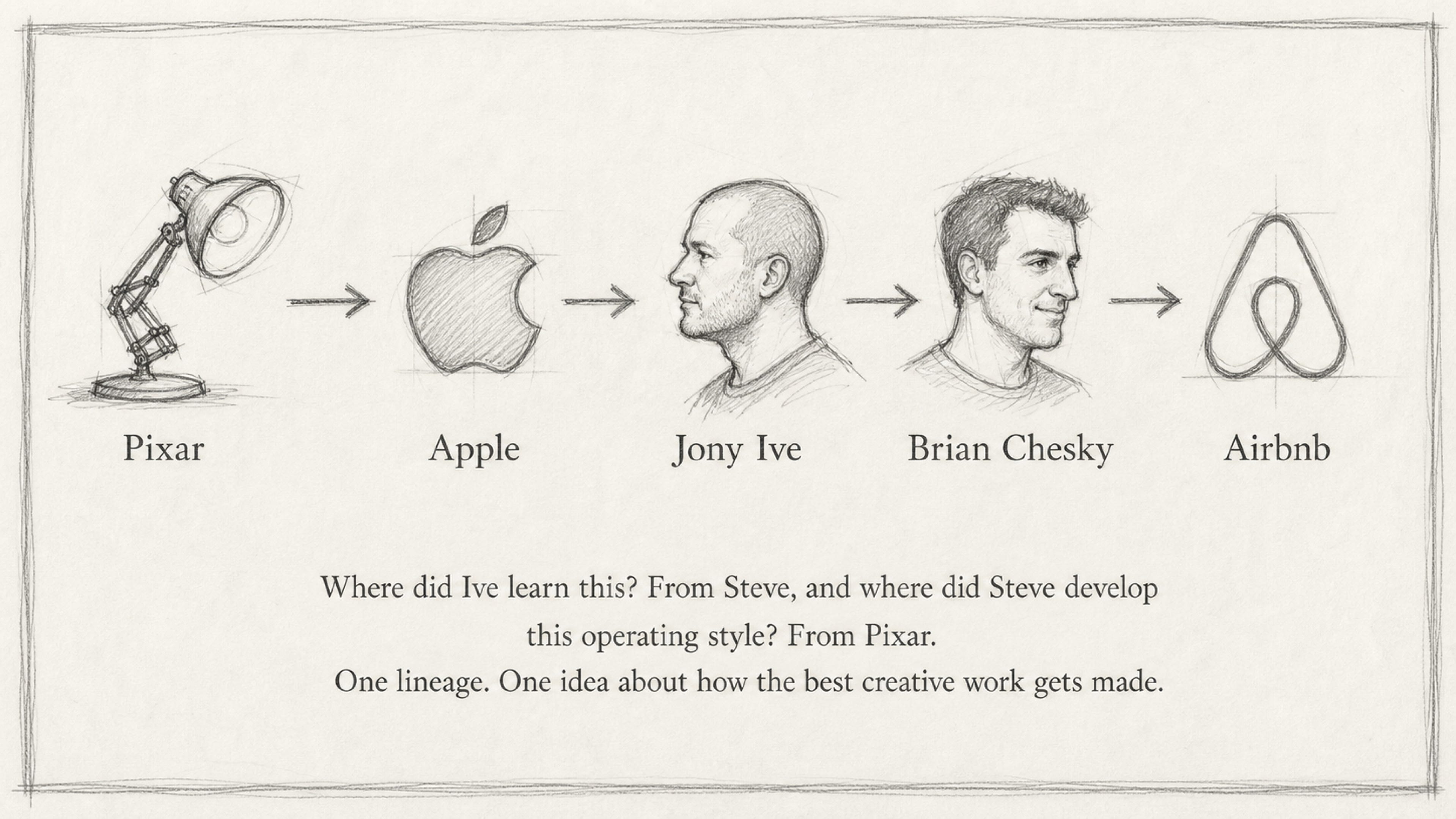
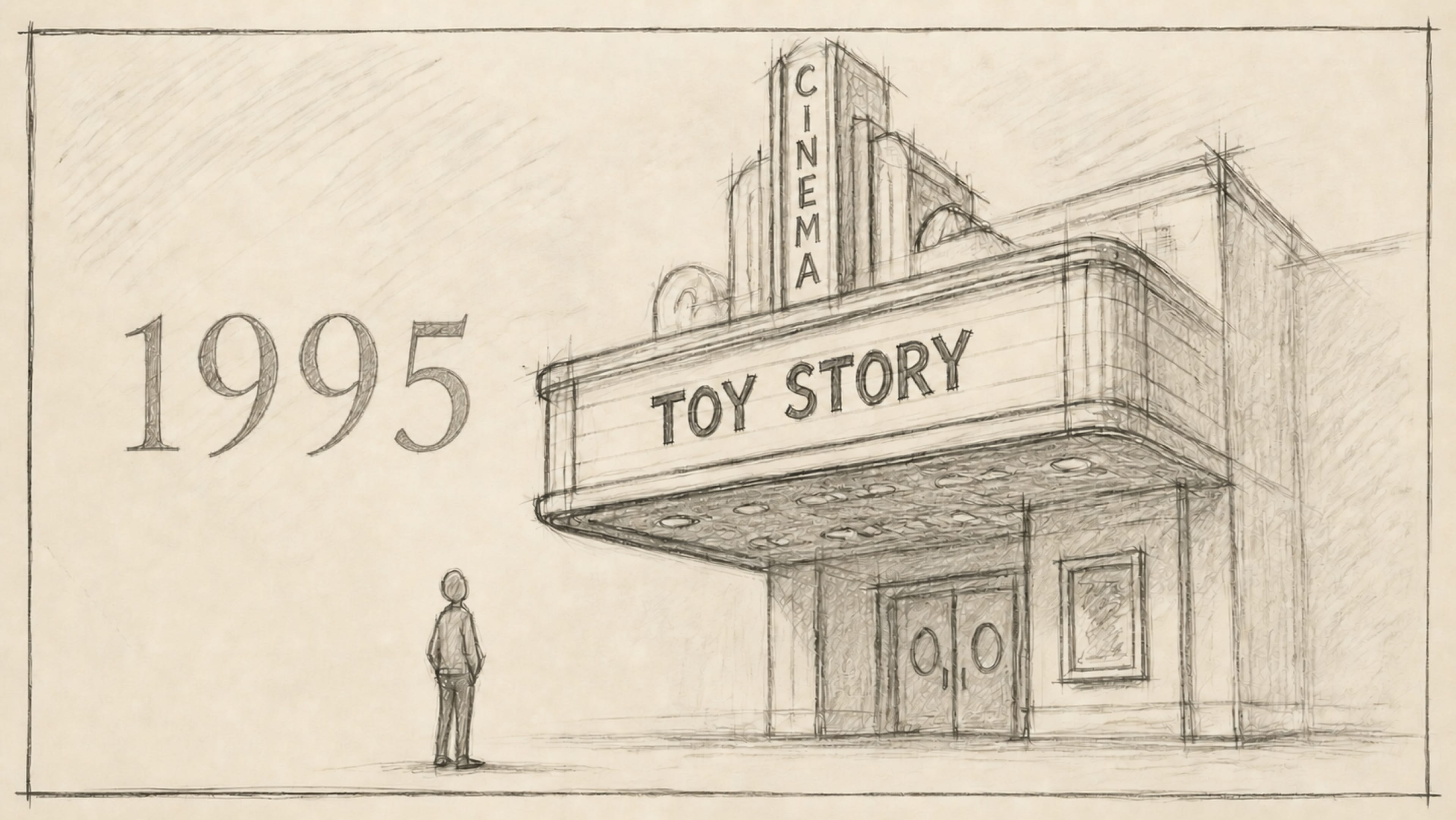
In November 1995, Toy Story opened, Pixar went public, and by close of the first trading day Steve Jobs was worth about $1.17 billion on paper. I don’t think people realize that Steve became a billionaire through an animation studio. Not a computer company. Not a software play. An animation studio he’d bought from George Lucas for $10 million a decade earlier and then poured close to $50 million more into — over half his net worth at the time.
It’s incredibly hard to become a billionaire in tech. Harder in the movie industry. And that detail reorganized how Jobs spent the rest of his career.
Ten years earlier, 1985. Jobs is thirty, freshly exiled from Apple, sitting on a hundred-million-dollar windfall from selling his shares. He starts NeXT. He buys a small computer graphics division from Lucasfilm. The graphics company bleeds money for years. But something else is happening inside it.
John Lasseter, a former Disney animator disillusioned by the waste of the big studio system, placed an intense focus on relentless iterative pre-production before a single frame was animated.
The method was called a story reel — rough cuts of the film voiced by the animators themselves to test narrative with their peers.
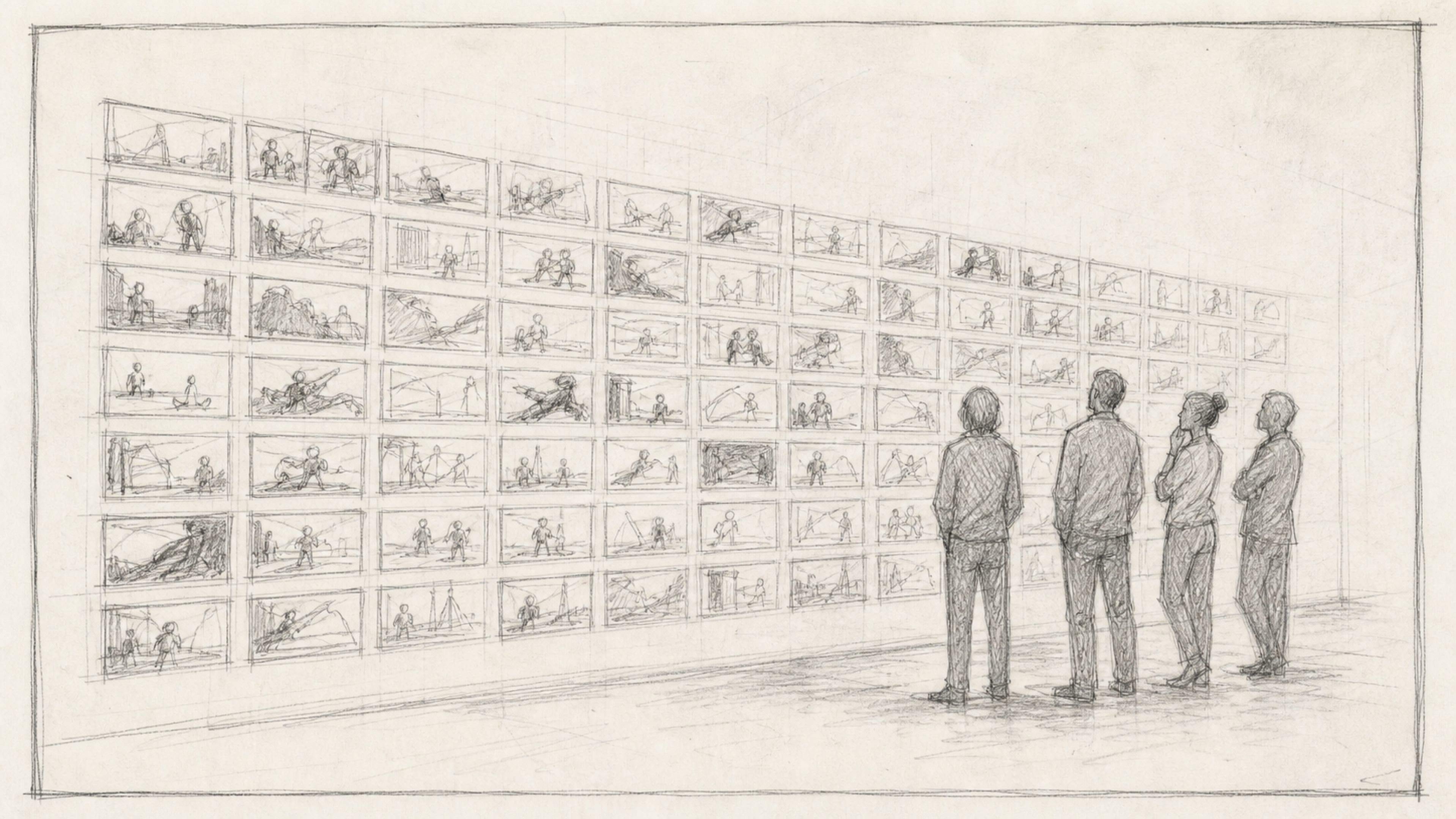
Lasseter called the process “story reboarding” because they didn’t do it once. They did it over and over, screening every few months for a brain trust of senior creatives who gave candid feedback. If the narrative wasn’t working, they went back to the script.
This could take two or three years. Before a single actor was hired for a multimillion-dollar retainer. Before a single frame was animated by Ed Catmull’s engineering team.
It turns out it’s cheaper to make prototypical movies with a small staff of elite creative talent over many years than it is to jump straight into the cost of a six-month production with a bad script.
Jobs stayed mostly out of the day-to-day operations, but by watching Catmull and Lasseter he witnessed a completely different approach to creating world-class products. The principle was simple and non-negotiable: you don’t start production until the narrative is undeniable.
That company became Pixar.
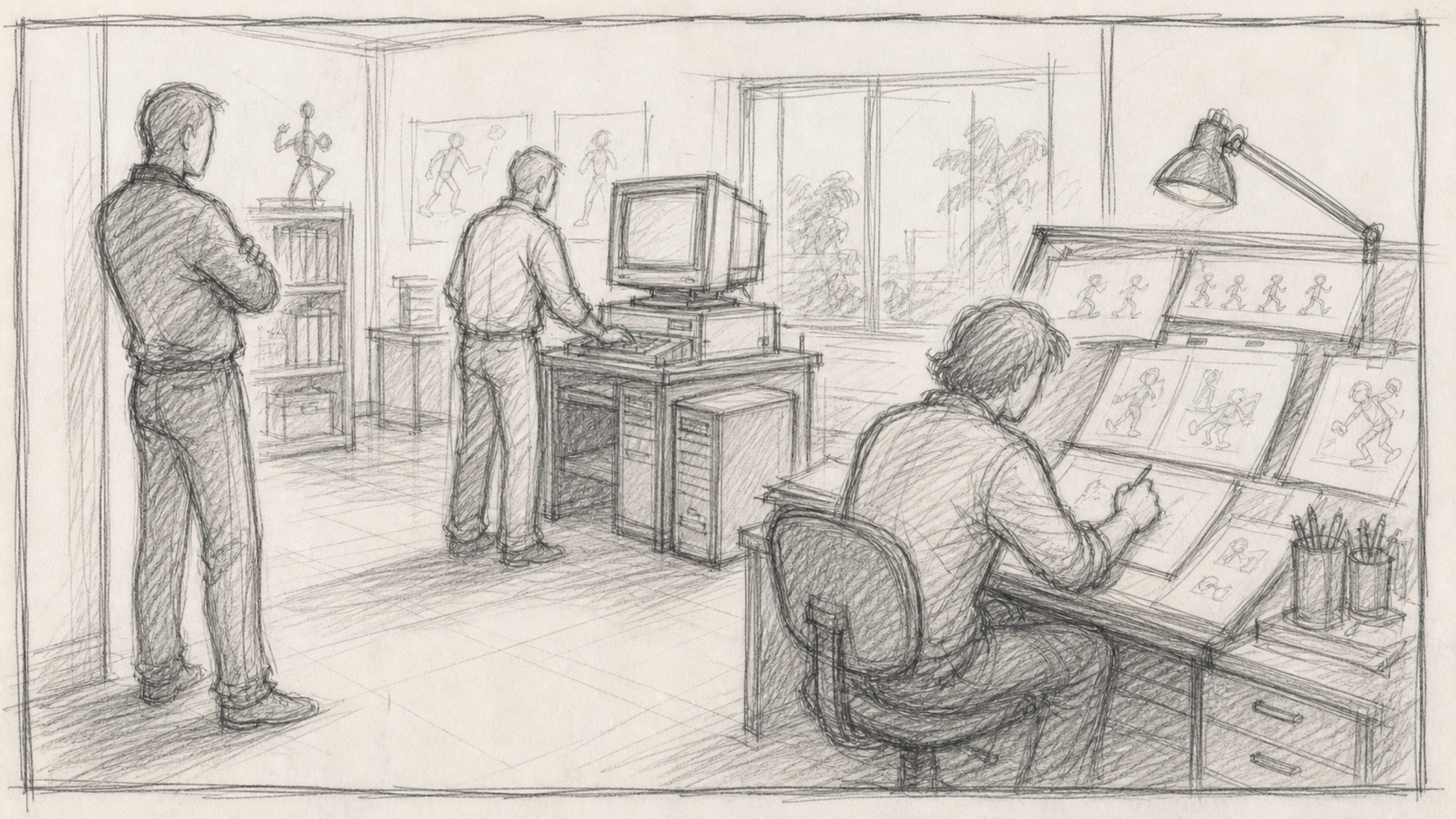
So in 1997, when Jobs returned to Apple as its CEO — ninety days from bankruptcy — he immediately tears everything down and rebuilds how decisions get made. The operating style looks remarkably similar to how he and the team at Pixar worked. And honestly, if I made a billion dollars working this way, I would do it at every company I went to.
At Apple, they didn’t debate ideas. They debated artifacts.
Getting in a room and selling your idea wasn’t part of the culture. Every major feature started as a demo, and for a demo to be useful it had to be concrete and specific.
The iPhone keyboard — they used a device called a Wallaby connected to a Mac to test out the autocomplete function. Just enough to test the interaction and get signal.
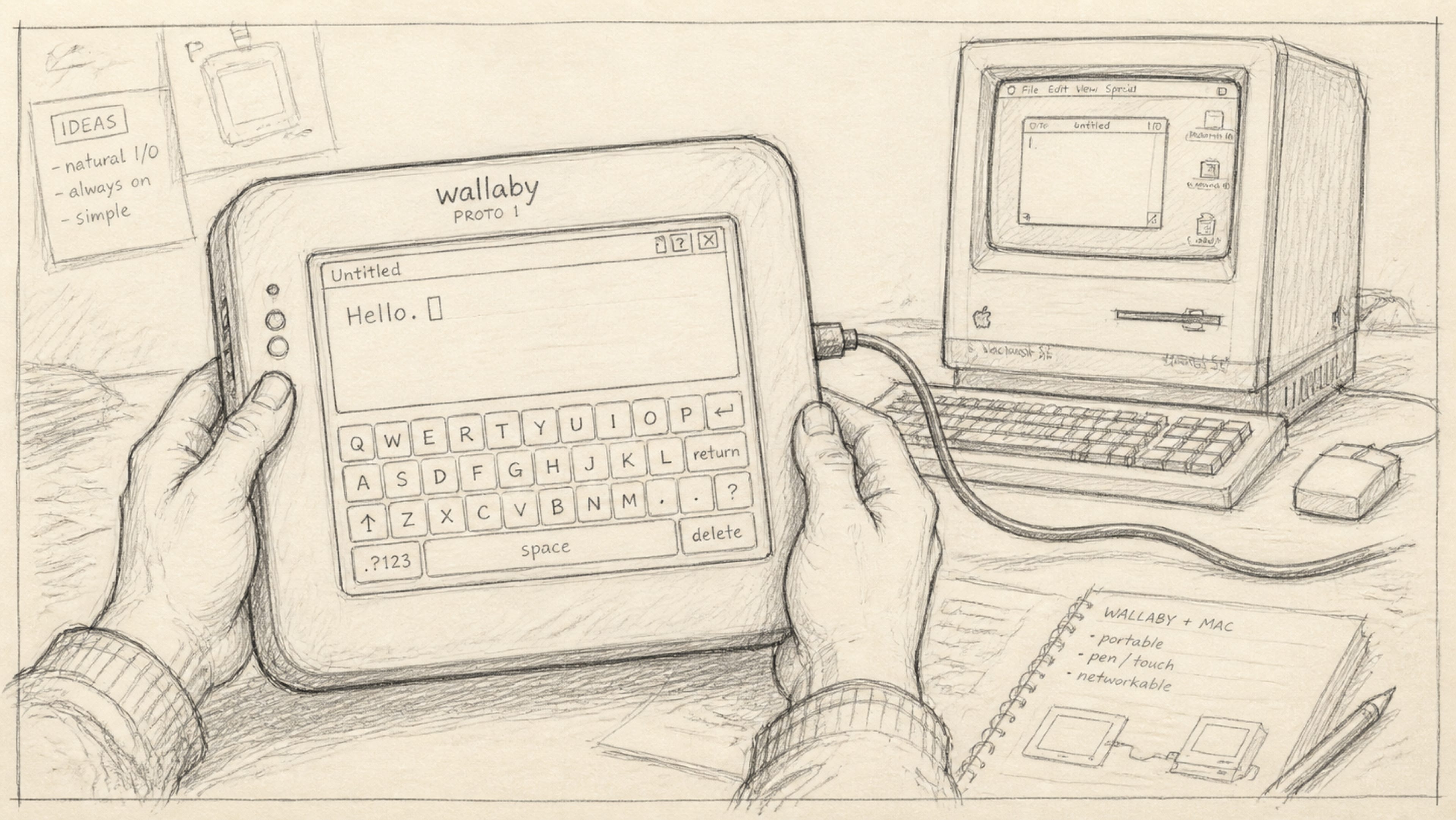
When demos went poorly, there was the same stream of constructive criticism, but there was never finger-pointing. The expectation was that there would be a follow-up demo, and the new demo would include a response to the feedback from previous demos. The one essential demo expectation: progress. (Ken Kocienda)
“We always started small, with some inspiration. We made demos. We mixed in feedback. We listened to guidance from smart colleagues. We blended in variations. We honed our vision. We followed the initial demo with another and then another. We improved our demos in incremental steps. We evolved our work by slowly converging on better versions of the vision. Round after round of creative selection moved us step by step from the spark of an idea to a finished product.”
— Ken Kocienda, Creative Selection: Inside Apple’s Design Process During the Golden Age of Steve Jobs
Tony Fadell said each team used internal heartbeats — aggressive prototype deadlines to force learning cycles. Tight deadlines force focus. It’s hard to make an end-to-end complicated workflow when you’re given two days to make the next demo.
The demos went through multiple rounds of review and phase gates, progressively moving up the org chart until a final gatekeeper — usually a VP — decided if it was ready to be shown to Steve.
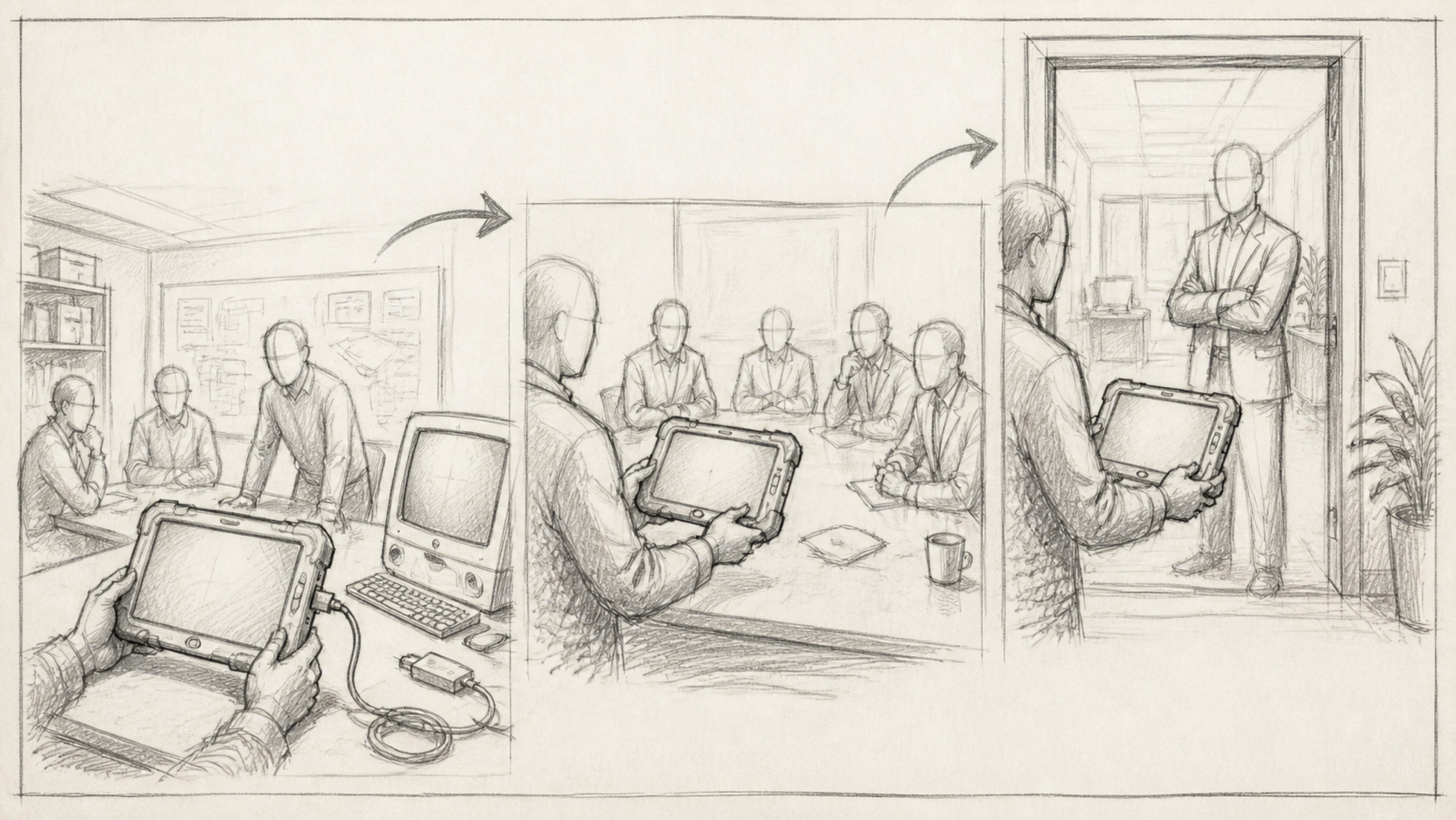
Every feature would eventually make it to him. And he decided which features got greenlit to go to production.
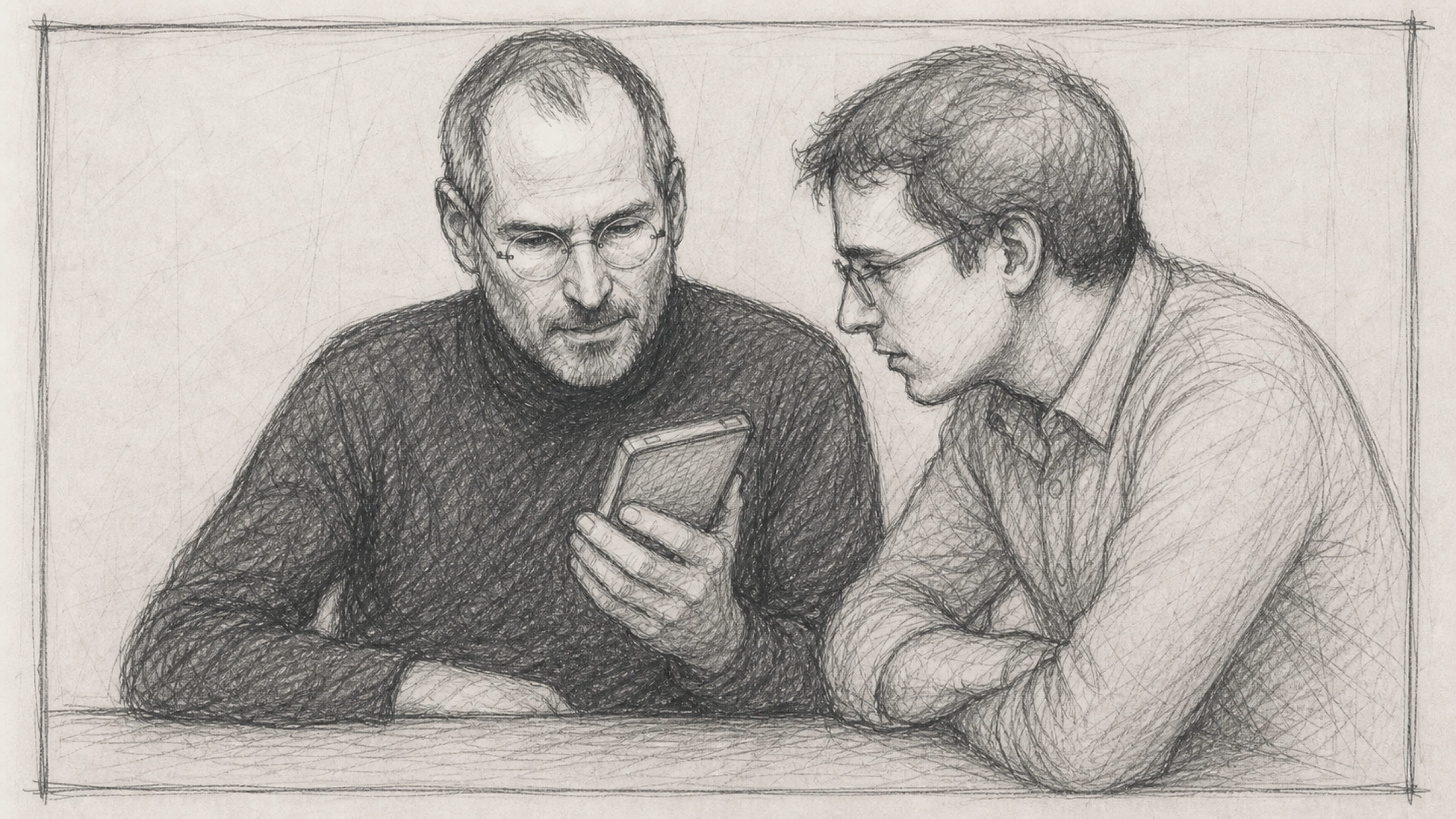
Within two years, this operating model put Apple back in the black. Within the next ten, they became one of the world’s most valuable companies. What had worked for a small animation studio — don’t start production until the narrative is undeniable — now ran the largest corporation on earth.
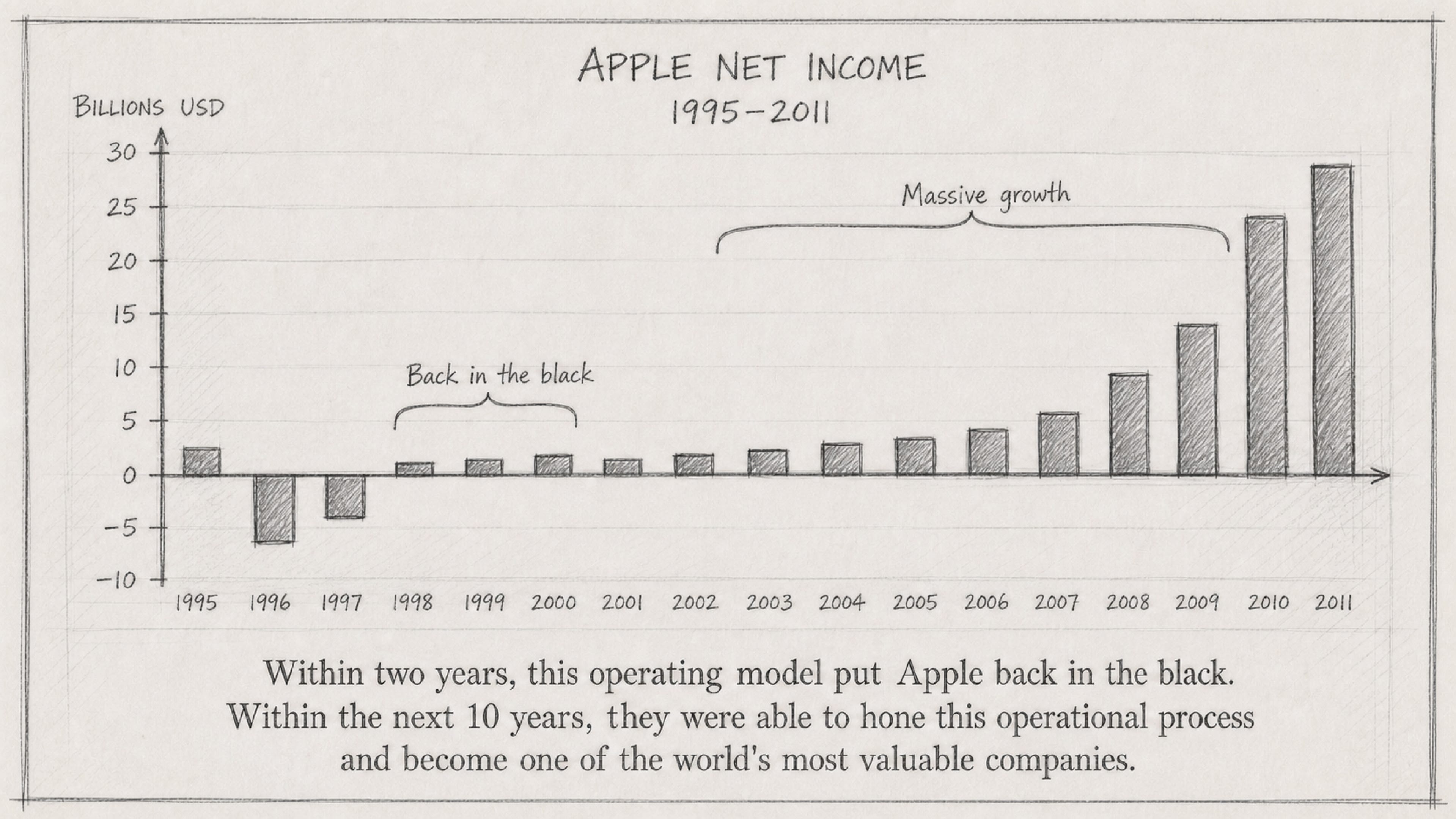
At Steve’s memorial service, Jony Ive eulogized: “Steve loved ideas and loved making stuff, and he treated the process of creativity with a rare and wonderful reverence.”
"Steve loved ideas, and loved making stuff, he treated the process of creativity with a rare and a wonderful reverence. You see, I think he better than anyone understood that while ideas ultimately can be so powerful, they begin as fragile, barely formed thoughts, so easily missed, so easily compromised, so easily just squished."
-Jony Ive, eulogy for Steve Jobs, Stanford University memorial service, October 16, 2011.
The principle had scaled. Not because Steve was a genius who couldn’t be replicated, but because it was an operating model. The creative process treated with reverence. Artifacts over arguments. Pre-production before production. An operating model can be copied.
Brian Chesky heard a version of this story and it reorganized his company.
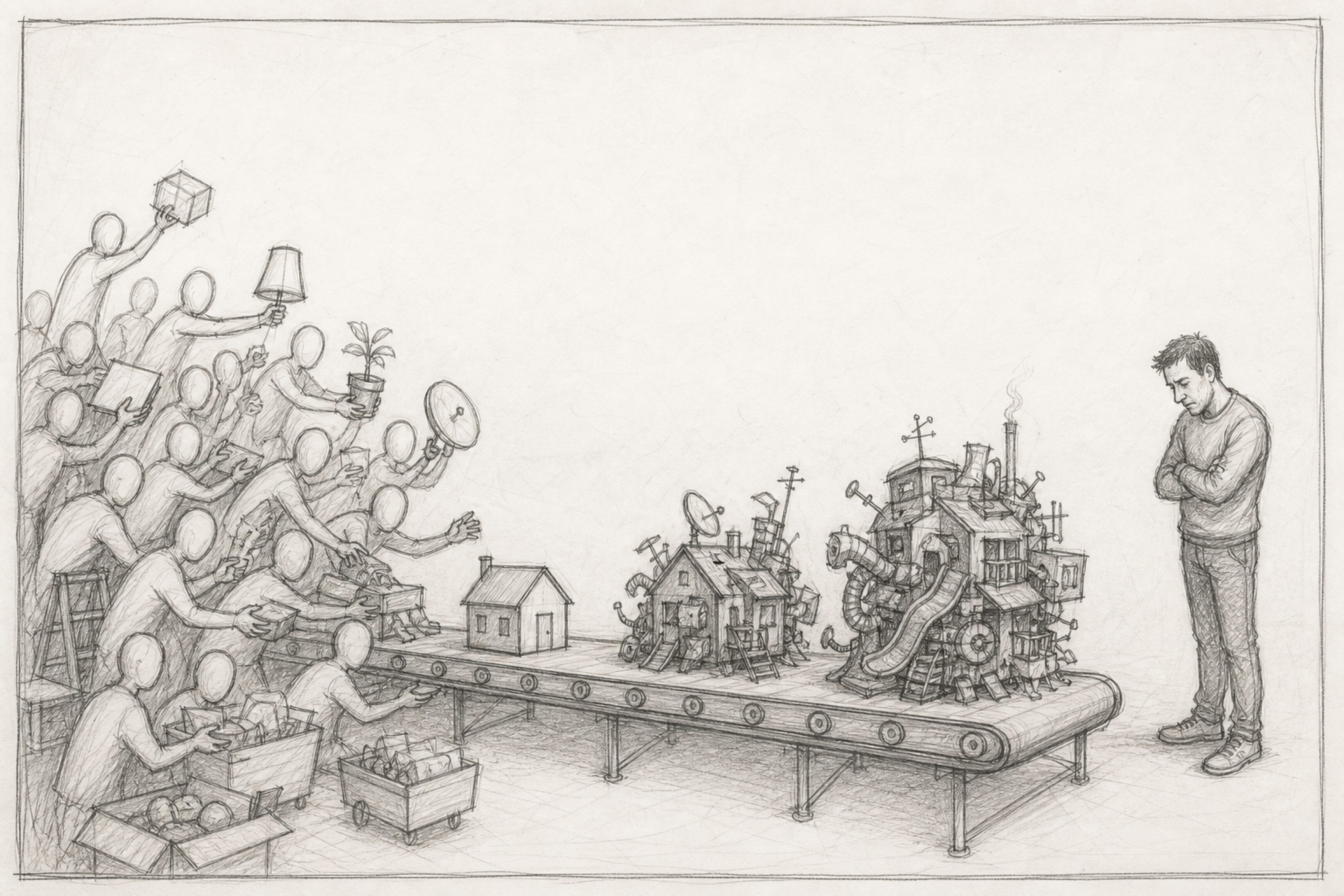
Before the reorganization, Airbnb was already in trouble. The brand was being tarnished by poor customer experience, random features, and a fractured narrative. Chesky had been doing things the “right way” — the product model, empowered teams — and it wasn’t working. The more people they hired, the more projects they ran, the less the product actually improved, and the more the cost went up.
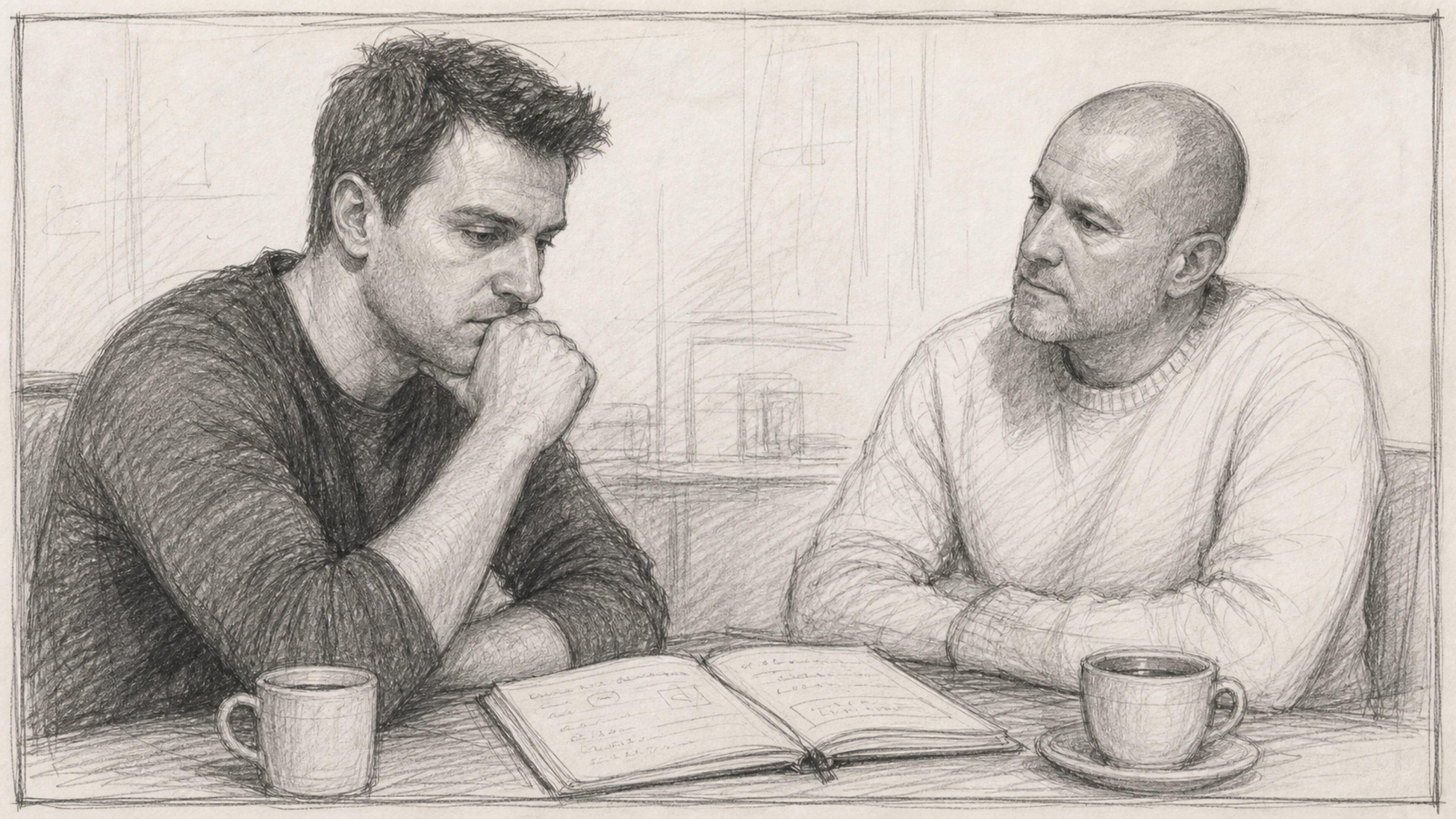
Chesky had the privilege of being mentored by Jony Ive. One day, while venting to him, Jony showed Brian that Apple was run like a studio. Small number of focused bets. One roadmap of focused products. Designers as architects. A CEO who treated the company itself as a design problem.
Brian said: “I had forgotten about the magic of this design renaissance that Steve Jobs had created at Apple. Everything I was taught about how you run a company was opposite of how Steve ran Apple.”
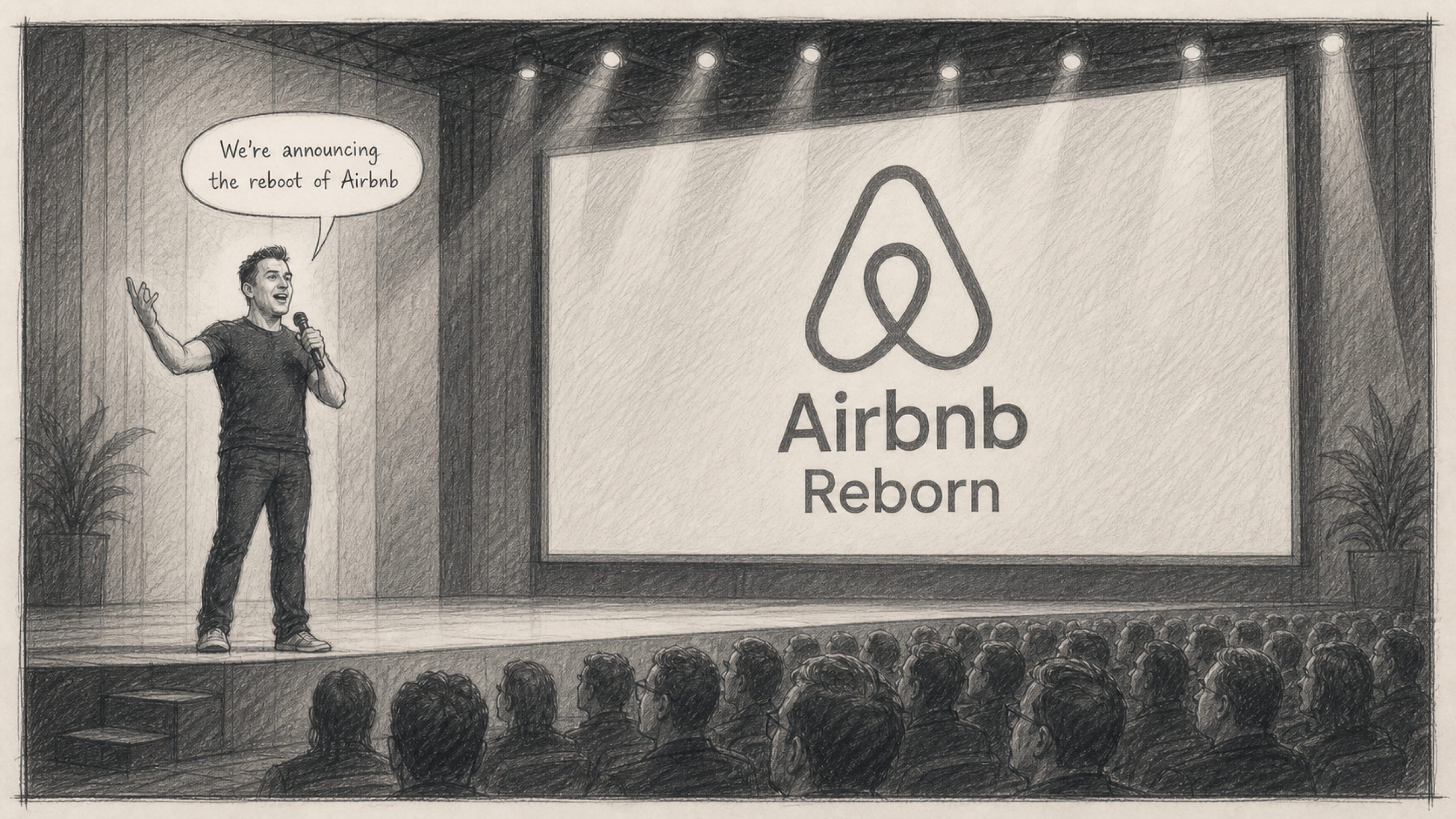
He made his decision. He wasn’t going to apologize anymore for wanting to operate his company his way. He spent the following years reorganizing Airbnb around these operating principles — principles that treated the creative process with reverence and gave space for the best ideas to surface. One lineage. One idea about how the best creative work gets made. The first movie they greenlit was rebooting the core Airbnb experience. They divested from everything else. No more multiple roadmaps, no more each executive owns their own thing.
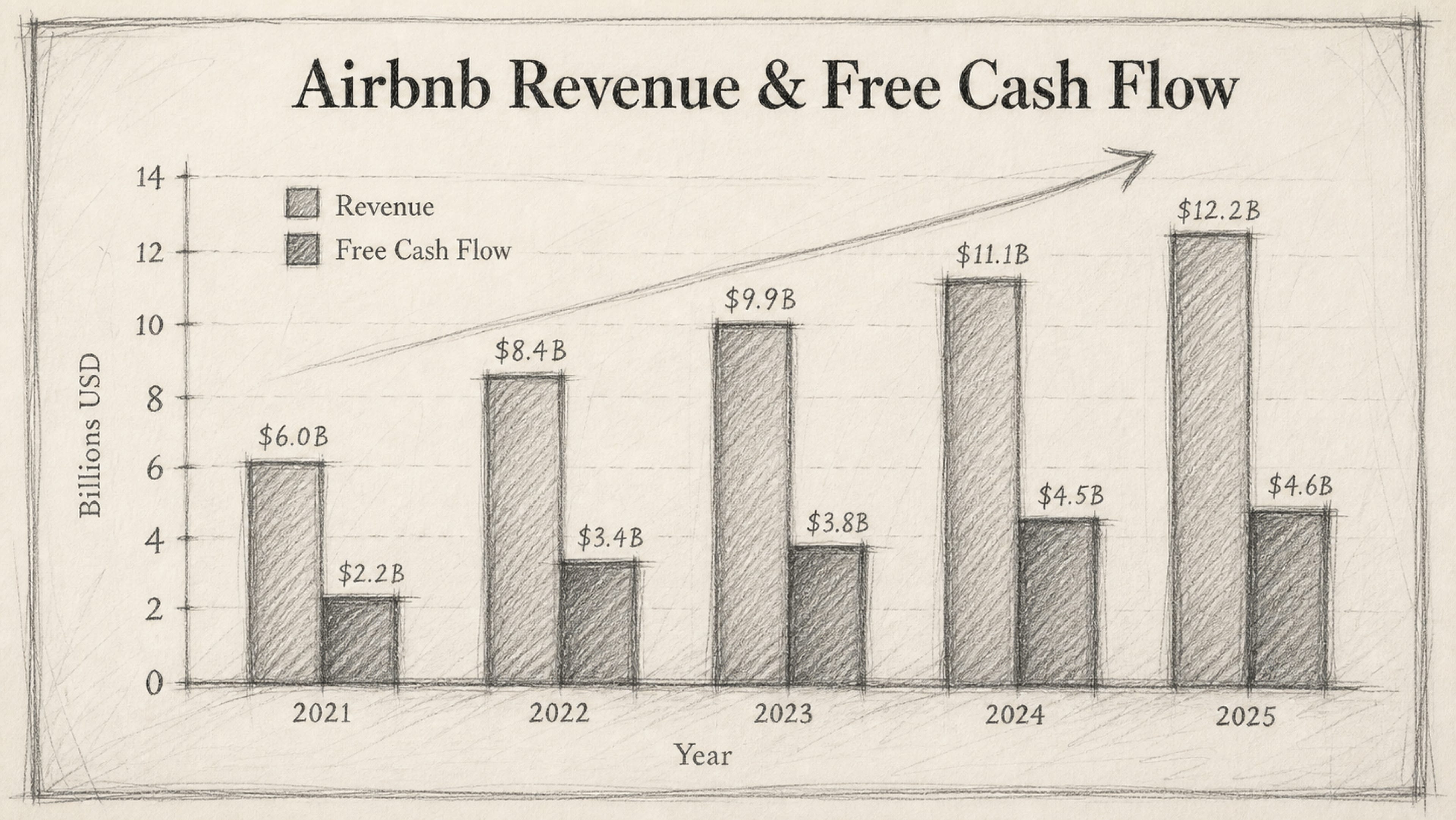
By 2025 they reported $12.2 billion in revenue, $4.6 billion in free cash flow. Brian said that’s more free cash flow per dollar earned than Apple or Google — and they did it by not trying to make money. They did it by focusing on the core experience and focusing on one thing: narrative.
This isn’t a personality cult. It’s an operating model. Operating models can be copied.
But I’m not running Airbnb.
Back in 2023, I attempted to operate this way before AI made it cheap. I was doing hybrid design and PM work. I reported to the CTO, and I gained a reputation for getting big projects done and quickly building trust with engineers. But I was doing two jobs, and it was brutal.
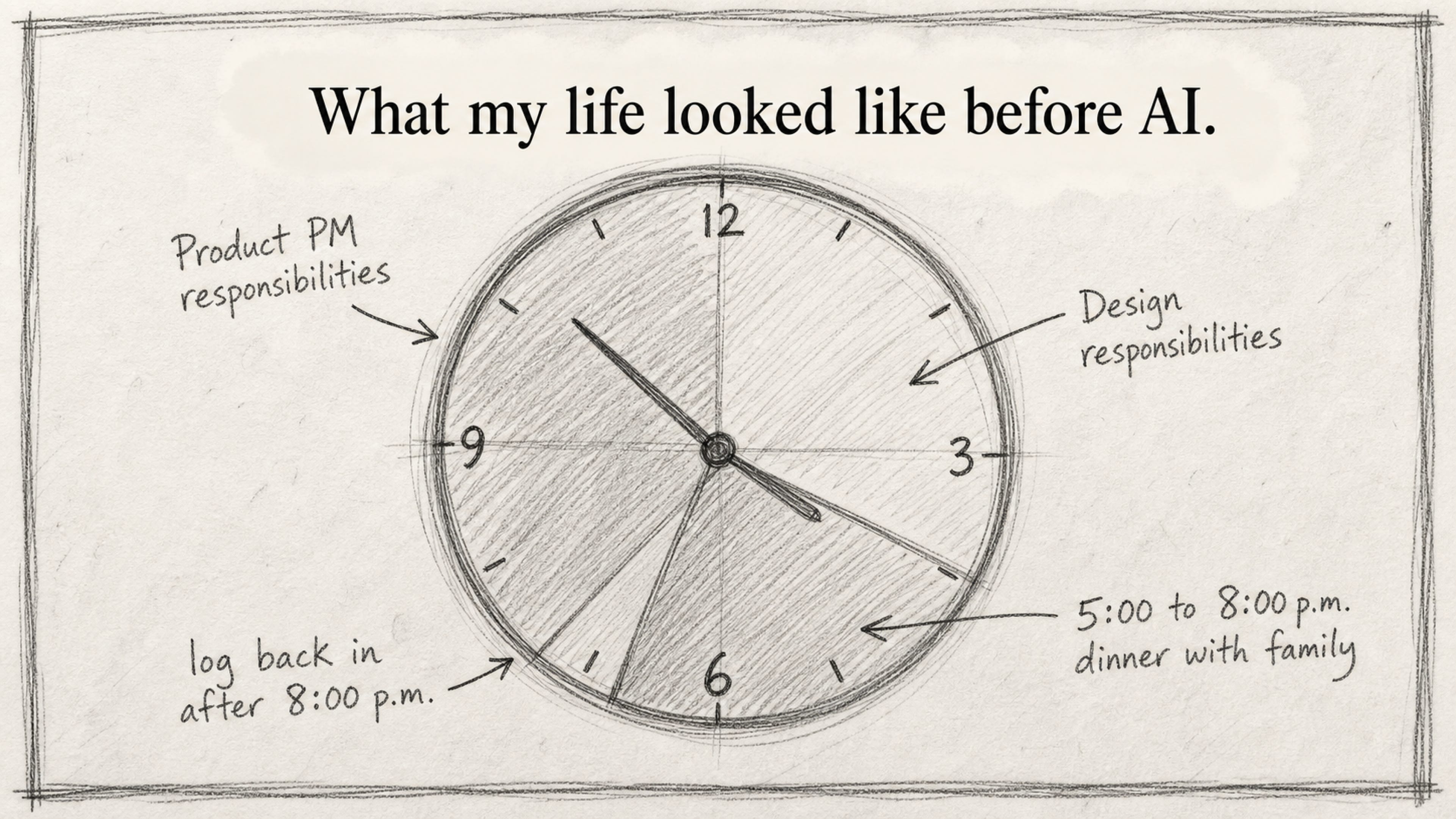
Eventually I threw in the towel. I told my CTO I was open to making the switch to one of the full-time roles, and because I wanted to stay strategic and support the design team, I switched to PM full-time. At first it was great — suddenly I had more time to be on top of my responsibilities. But over time, the job became mostly blocking and tackling. Alignment meetings. Decision docs. One-pagers. PRDs. None of these meetings led to meaningful outcomes. Nobody was reading the docs.
I was depressed, and I discovered firsthand that getting in a room and talking it out isn’t a strategy.
Then Claude Sonnet 3.5 came out. AI suddenly got really good at writing, and I started experimenting. I set up a project instruction that said, “You’re my ghostwriter. Don’t make up content. Just interview me, then write the one-pager.” In a tenth of the time, I was creating memos that gave clear descriptions of my intent. I started using Granola for meeting notes, and my mental bandwidth freed up. Suddenly I had time to work the way I wanted to work — to craft my own narrative of what I thought the product should be.
So I immediately started making demos and getting them in front of stakeholders and customers.
One day I was shadowing another PM on a customer call. His demo was not going well. The customer was in the wrong segment. The prototype had nothing to do with her job. The interview was dying. I messaged the PM on Slack: “When you’re done, can I have a few minutes at the end?”
I spent the next five minutes pulling up that customer’s actual data and loading it into my prototype. He hands the mic over to me. I send her a link and she opens it.
“This is nice. Wait — is this my data? Are these my customers? I can see all these invoices? Yeah, this is what I’ve been asking for. When are you gonna make this?”
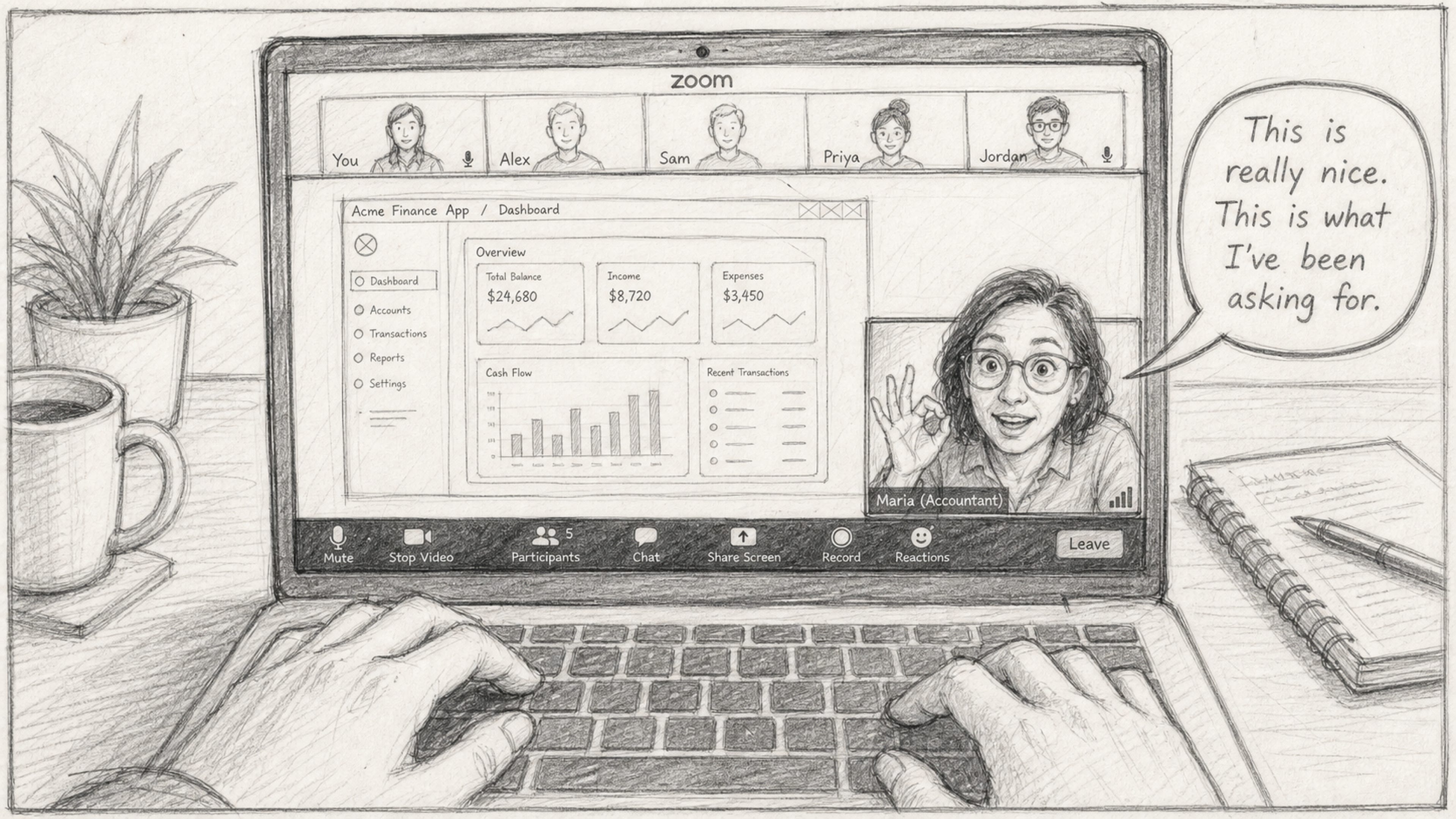
The customer sold herself because the prototype had her data, her workflow, her problem. The narrative was right, I understood the problem, and the artifact proved it. From that moment on, I knew I was never going back.
AI didn’t change the game. It changed who could play.
Making demos at the volume and speed required to discover the right narrative used to be psychologically and operationally brutal. It involved overcoming apprehensions about committing time and effort to ideas you aren’t sure are right, exposing rough work to colleagues who level pointed criticism, knowing that almost all demos fail in the dead-end sense. Remember when it took two weeks to make a janky Figma prototype just to test one idea?
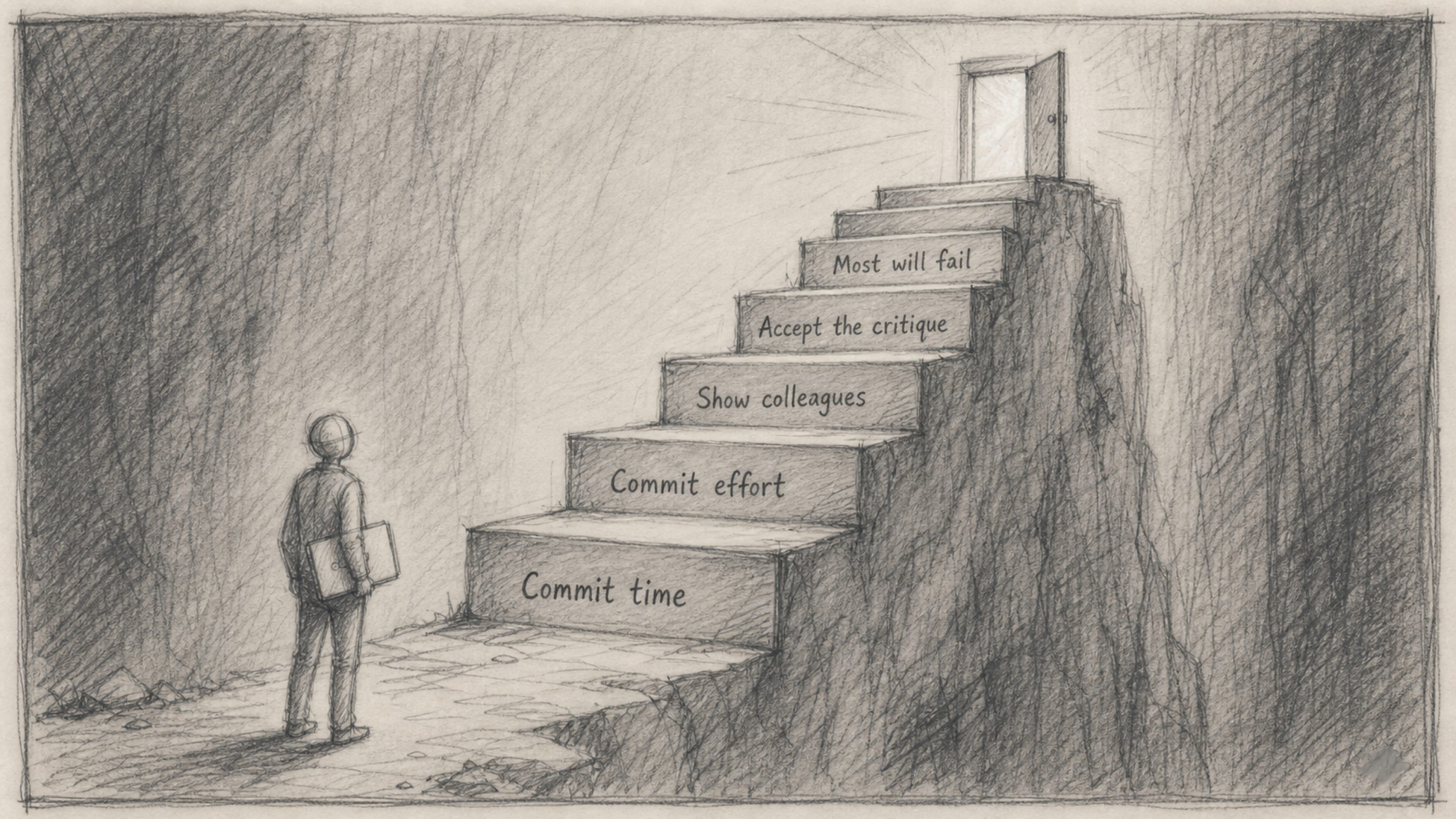
It isn’t anymore.
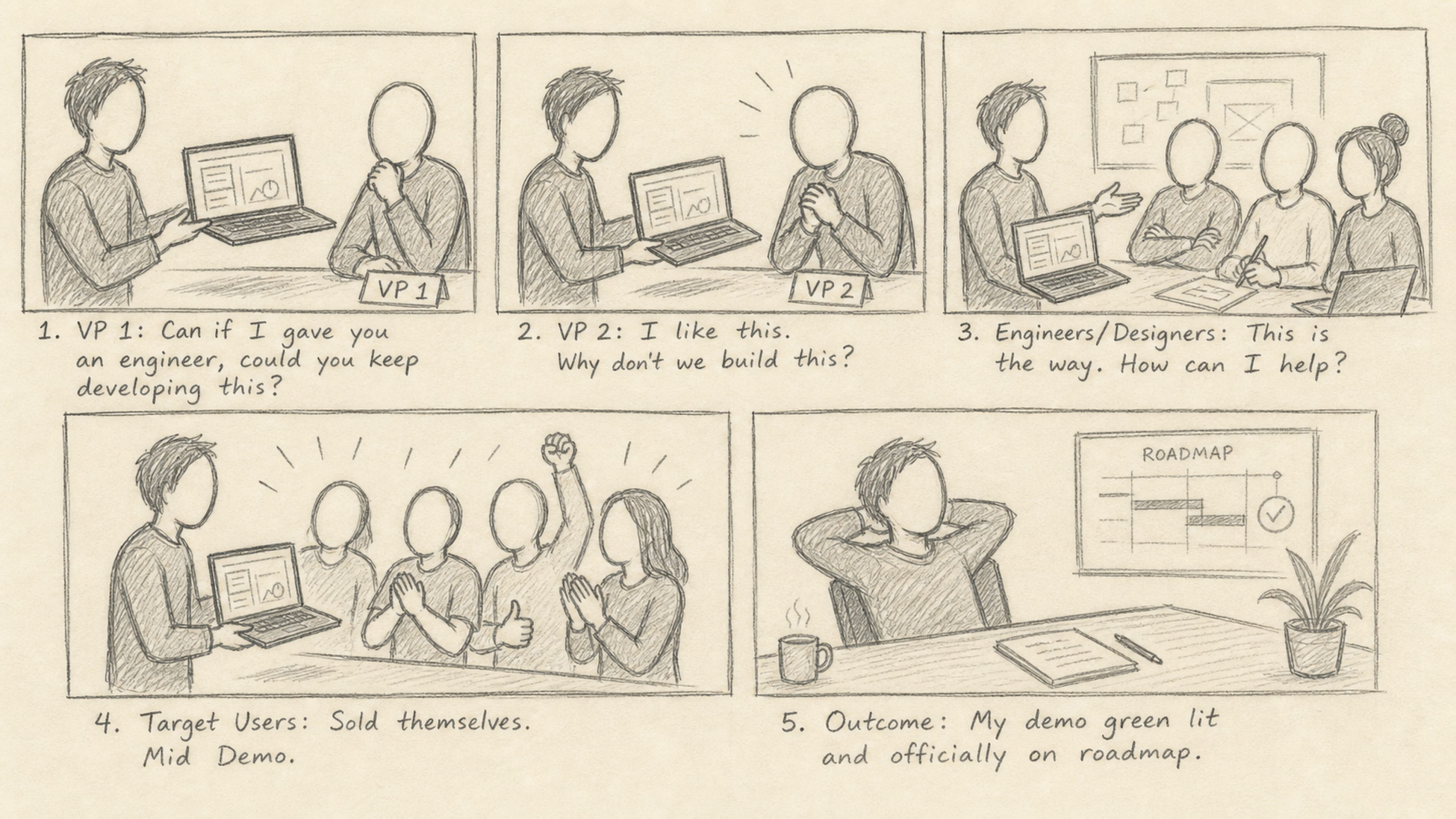
I did five full prototypes of an AI-native workflow in five weeks — with backends and everything. The first three, I couldn’t get them to work. Threw them away, and it didn’t hurt to throw them away because AI did the grunt work to set them up. By the fourth, I was getting interest.
By the fifth, two VPs were offering me engineers. Developers were asking to join. target users sold themselves mid-demo. My demo was greenlit and officially on the roadmap. Not a single PRD written. It wasn’t talked about in an off-site. It happened because you don’t need to ask permission to do this kind of work.
The artifact argues better than you ever could. Leadership just means you have followers. As long as it works and it’s exciting, people will follow you.
There’s one objection left, and it’s the real one.
“That’s great, Caden, but you’re technical. You know how databases work. How am I supposed to make demos if I studied graphic design?”
So let me tell the story of Jeremy Fry.
Fry made his fortune selling motorized valves for industrial pipelines. But he was not a pipeline man at heart. He was a builder of things that didn’t exist yet. He discovered a promising young talent from a local university and took him under his wing.
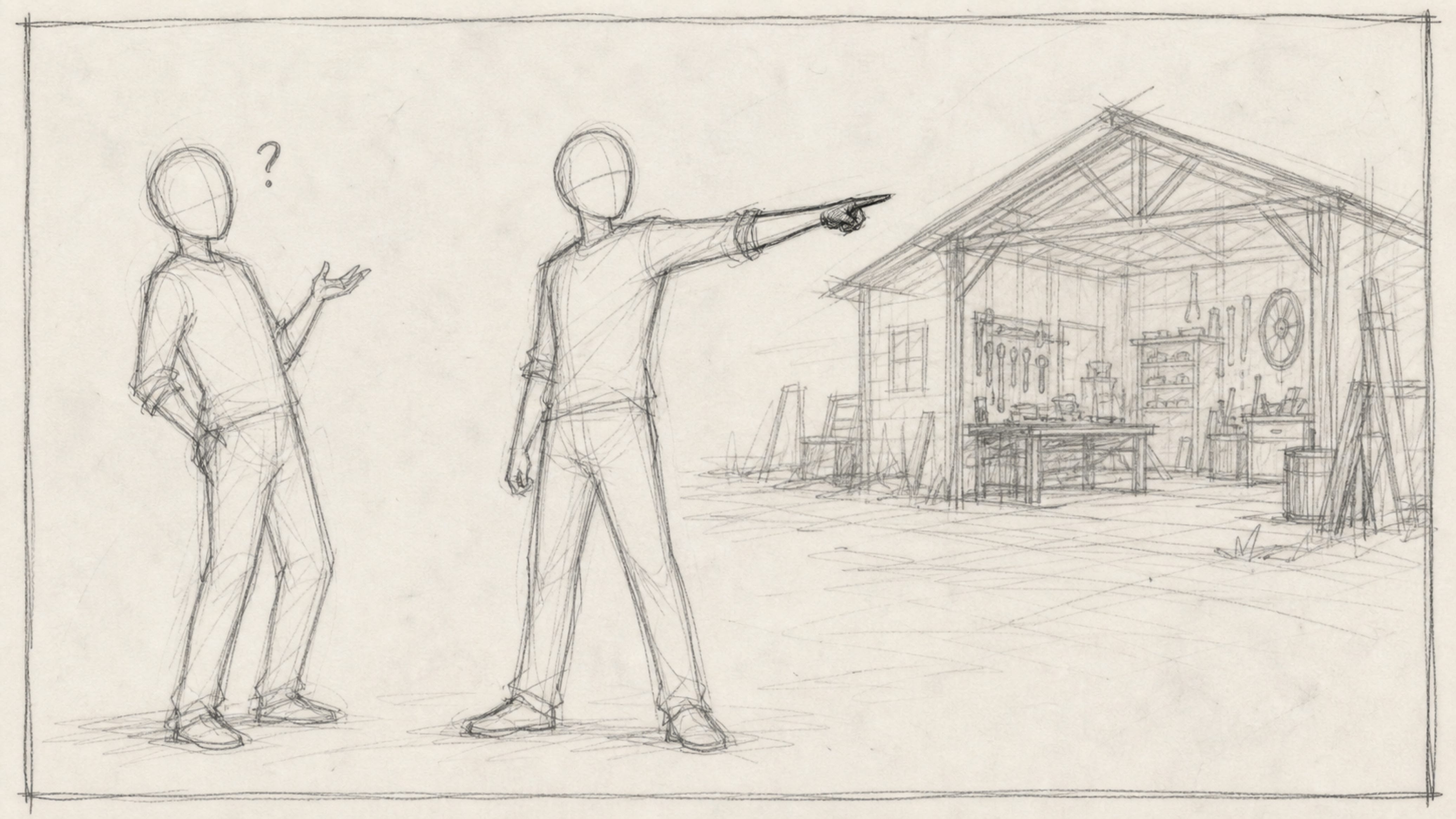
One day, the young man went to tell Jeremy about his amazing idea — likely looking for advice, maybe fishing for a compliment, secretly hoping to impress his mentor. Jeremy didn’t ask for a plan. He didn’t ask for a sketch. He pointed to the workshop. “You know where it is. Go and do it.”
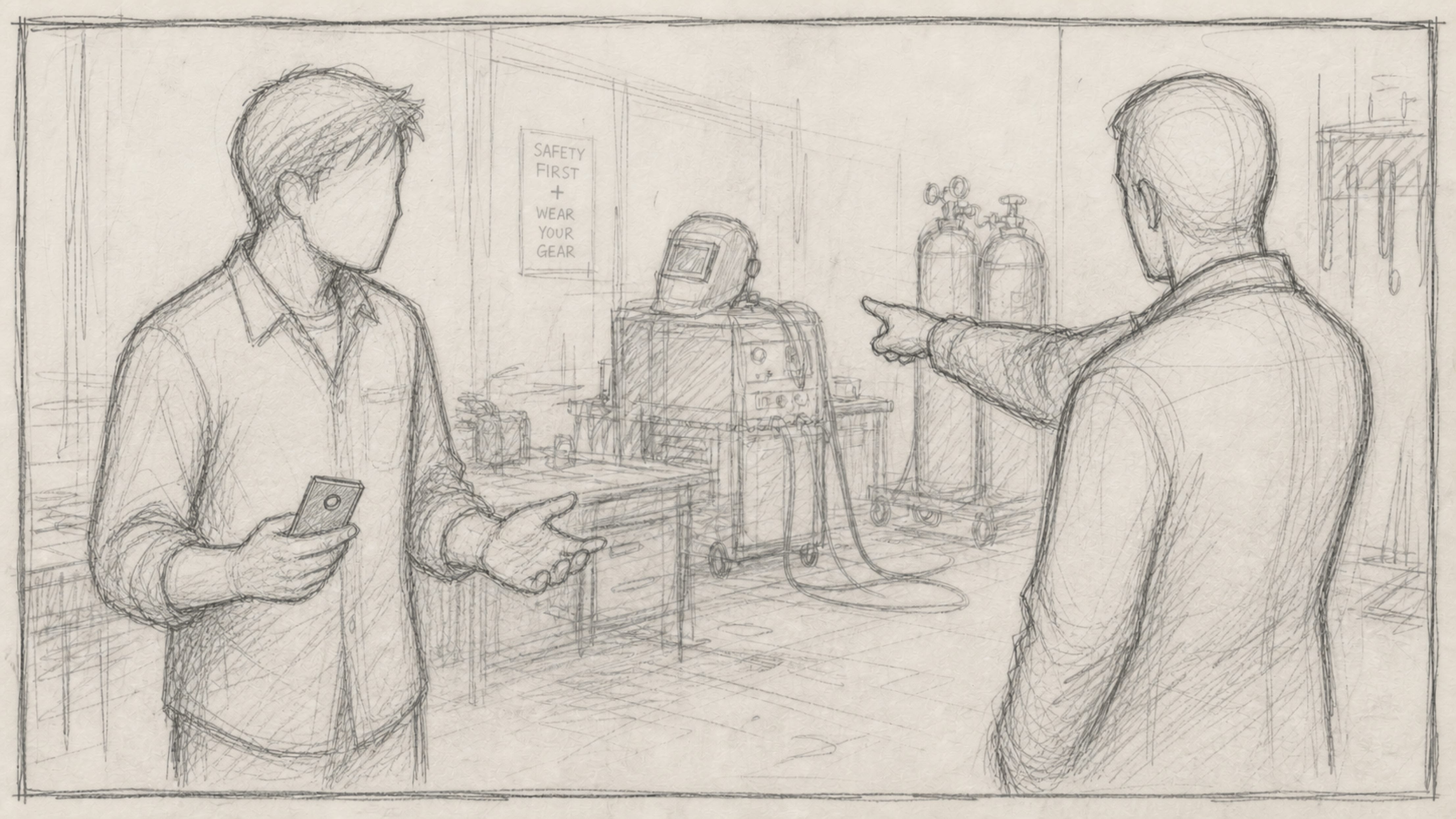
At some point they needed to weld something. The young man didn’t know how to weld. He asked if they could hire a welder. Jeremy didn’t blink. He pointed to the welding equipment. “There’s the welder. Go weld it. Figure it out.”
He suggested they bring someone who knew about hydrodynamics just to be sure. Jeremy pointed at the lake. “The lake’s down there. The Land Rover’s over there. Take a plank of wood, drag it through the water, and look at what happens.”
The young man Jeremy took under his wing was James Dyson.
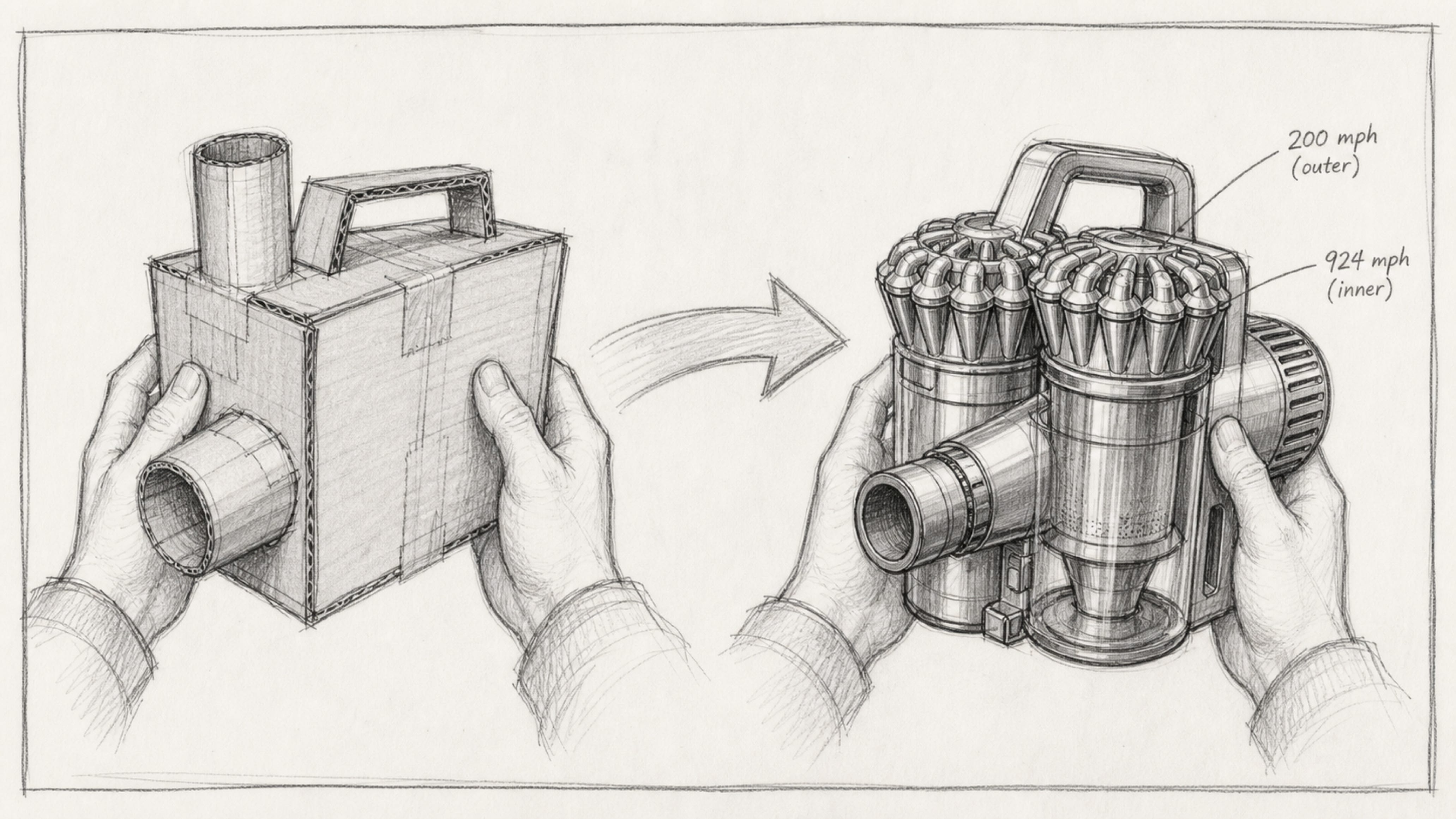
Dyson studied art. Not engineering. Not physics. Art. His first cyclonic vacuum cleaner was built from cereal packets and masking tape. He didn’t fully understand the physics behind it yet. He built it first and learned second — roughly ~5,000 prototypes over five years, before the internet, before AI. And now he owns one of the world’s most impressive engineering companies, employing over ~4,000 engineers and designers.
The credential did not make the invention. The obsession with the narrative did.
Dyson said: “After the idea, there’s plenty of time to learn the technology.”
The companies and the people in these stories share one operating principle. They didn’t start with the best tools. They didn’t start with the right credentials. They started with a narrative they believed in and then iterated relentlessly — in pre-production — until the narrative was undeniable. Then they let the artifact argue for them.
AI has given everybody a camera. It can write the PRD, make the design, ship the code at the median professional level. So why is success still concentrated? Because the best filmmakers spend their time on everything that happens before the camera turns on. The concept. The framing. The narrative. The sequencing. By the time they go into production, the movie has already been made on paper.
It was never about the camera. It was always about the person willing to stand away from it long enough to find out what the story was.
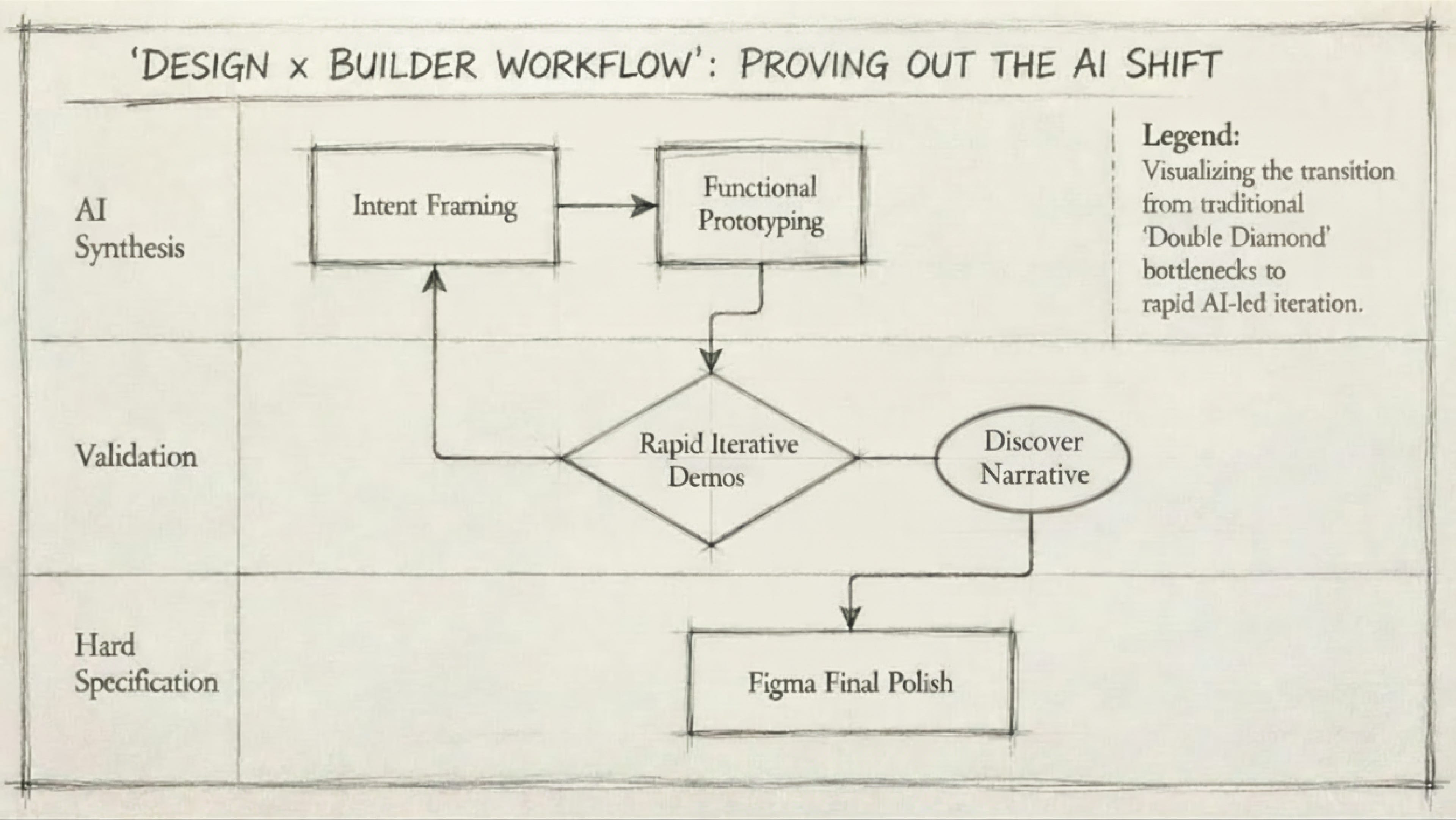
Diagram: My AI Native Design Process
About: Caden Damiano

Caden Damiano is a software designer and product manager who has spent his career untangling problems in industries most people overlook — tertiary finance, real estate technology, working capital for agriculture, and financial operations for small and mid-size businesses. He hosts Way of Product, a podcast and Substack newsletter where, over eight years and 180+ episodes, he has interviewed designers, PMs, and engineers about how good work actually gets done.
PS — If you want to pitch coming on the show, or you know someone I should talk to, shoot me an email at caden@hey.com with "January752" in the subject line so it gets past my filters. I'm not optimizing for famous guests. I'm optimizing for interesting conversations, even from people who aren't LinkedIn influencers.


